When buyers compare China-made laser equipment, price and output power are only part of the decision. The harder question is what certifications are required for laser equipment in the destination market. Grand View Research reported that the global laser technology market was valued at USD 20.3 billion in 2023 and forecast an 8.3% compound annual growth rate through 2030. A growing market brings more suppliers, but not automatically clearer compliance documents. Details matter.
Requirements depend on the laser’s class, intended use, and destination. IEC 60825-1 addresses laser-product classification and safety; ISO 11553-1 covers machinery using laser processing. For shipments to Europe or the United States, additional rules may apply, and CE marking or FDA requirements should be checked against the specific product and market. They are not universal badges. Laser-safety specialist Ken Barat’s published guidance can be paraphrased in one practical sentence: a product label cannot replace a workplace hazard assessment. Buyers should verify the model number, test reports, labeling, protective housing, interlocks, and user manual against the offered equipment. Ask for documents before payment, not after the crate arrives. A certificate for a similar model may not cover the machine being purchased. This is easy to overlook. It is also where a careful buyer should pause. The sections ahead explain how to assess the paperwork, confirm its scope, and identify questions worth asking suppliers.
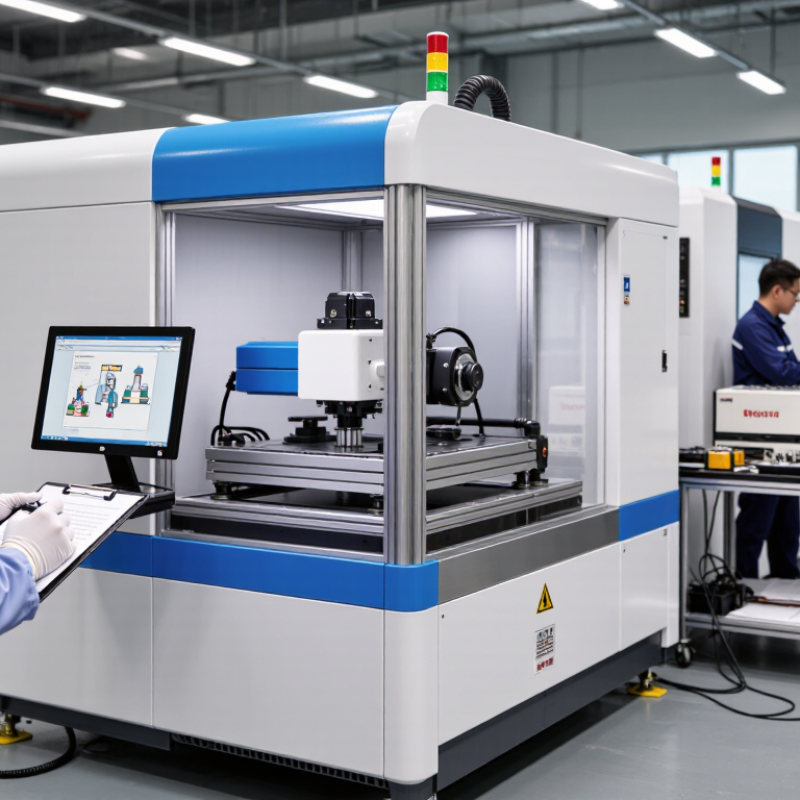
Certifications for laser equipment made in China depend on the destination market, machine type, and laser classification. There is no single certificate that grants access to every country. In China, CCC applies only when a product falls within the current compulsory certification catalogue; many industrial laser systems are not automatically covered. Check the exact model and configuration. Scope matters.
For the European market, manufacturers may need CE marking under applicable rules, supported by a risk assessment, technical documentation, and testing. IEC 60825-1 provides laser classification and safety requirements, while IEC 60204-1 addresses electrical equipment on machinery. These standards guide conformity work; they are not certificates by themselves.
In the United States, laser products are subject to applicable FDA CDRH requirements, including 21 CFR 1040.10 and 1040.11. Importers should confirm reporting, labeling, and product-specific obligations before shipment.
Quality-system credentials can support supplier evaluation, but they do not replace product approval. The ISO Survey 2023 counted 1,265,216 valid ISO 9001 certificates worldwide; that figure concerns management systems, not certified laser models. A careful file review should match the test report, nameplate, manuals, and delivered machine. Small differences matter. A changed enclosure or interlock may affect the safety assessment, so buyers should verify evidence with a competent conformity-assessment body.
Domestic and export markets ask different questions. In China, manufacturers should identify applicable GB standards and verify whether the exact product category appears in the compulsory certification catalogue. CCC is not a blanket requirement for every laser machine. Laser radiation safety, electrical safety, and electromagnetic compatibility still need documented assessment. For export, the destination sets the route: EU sales may require CE conformity under applicable legislation, while US shipments face FDA laser-product rules. IEC 60825-1 is a key laser-safety reference, but using it alone does not prove compliance in every market.
Evidence must match the machine and destination. Keep risk assessments, test reports, technical files, labels, and supplier records consistent. A change to the laser source or enclosure can affect the assessment. ISO’s 2023 Survey counted about 1.26 million valid ISO 9001 certificates worldwide. That figure reflects quality-management adoption, not product approval. The European Commission’s 2023 Safety Gate report recorded 3,412 alerts across product categories; it does not isolate laser equipment, but it illustrates active market surveillance.
In practice, teams sometimes over-certify. That costs time and can leave gaps in the documents that matter. Start with the machine’s intended use, technical specifications, and destination-country rules, then confirm requirements with a qualified testing body. A practical detail: check that the warning label, user manual, and test report describe the same laser class and operating conditions. I would still recheck requirements before shipment; rules and product configurations change.
China Best Laser Equipment: What Certifications Are Required?
Electrical safety and EMC requirements depend on the equipment’s design, intended use, and destination market. For many laser machines, IEC 60204-1 addresses electrical equipment on machinery, including wiring, grounding, and emergency stops. IEC 61010-1 may apply to laboratory or measurement equipment. Laser radiation safety is a separate concern, commonly assessed under IEC 60825-1. These standards are not interchangeable. Not always. Confirm the applicable product category before selecting tests.
EMC assessment checks whether equipment both limits emissions and withstands electrical disturbances. IEC 61000-6-2 and IEC 61000-6-4 are often relevant to industrial environments, while IEC 61326-1 can apply to measurement and control equipment. A test setup may include the laser power supply, controller, cooling unit, and connected cables. Each can affect results. Keep cable routing and grounding consistent with the final installation; small changes can alter emissions. The required conformity documents and test editions vary by market, so confirm them with a qualified testing laboratory or compliance specialist.
Tips: Ask for reports covering the complete machine, not only individual components. Check that model details match the nameplate. Leave time for retesting; real installations can behave differently from a lab setup.
| Area | Standard, Regulation, or Scheme | What It Covers | Applicability and Key Notes |
|---|---|---|---|
| Laser radiation safety | IEC 60825-1, Safety of Laser Products — Part 1: Equipment Classification and Requirements | Laser classification, accessible emission limits, protective housings, safety interlocks, labels, and user information. | Relevant to laser products. Confirm the current edition and applicable national adoption in the destination market. Requirements depend on the product’s design and laser classification. |
| Electrical equipment of machinery | IEC 60204-1, Safety of Machinery — Electrical Equipment of Machines; GB/T 5226.1 is China’s corresponding national standard | Electrical design and construction, protective bonding, wiring, overcurrent protection, control circuits, and emergency-stop functions. | Typically relevant to complete laser machines. Select the edition and national adoption required by the destination market and applicable conformity route. |
| Electrical safety for measurement, control, or laboratory equipment | IEC 61010-1, Safety Requirements for Electrical Equipment for Measurement, Control, and Laboratory Use | Protection against electrical shock, fire, mechanical hazards, and foreseeable misuse. | Use when the equipment falls within this standard’s scope, such as certain laboratory or control equipment. It is not a general replacement for machinery safety requirements. |
| China market access and product certification | China Compulsory Certification (CCC) catalogue and applicable product rules | Mandatory certification for products included in the applicable CCC catalogue. | Do not assume that every industrial laser machine requires CCC. Confirm the product classification, intended use, and current catalogue with the relevant certification authority or testing body. |
| EMC emissions for industrial environments | IEC 61000-6-4, Generic Standards — Emission Standard for Industrial Environments | Conducted and radiated electromagnetic emissions in industrial environments. | Commonly used when no applicable product-family EMC emissions standard takes precedence. The applicable edition and test configuration depend on the market and equipment. |
| EMC immunity for industrial environments | IEC 61000-6-2, Generic Standards — Immunity Standard for Industrial Environments | Immunity to disturbances such as electrostatic discharge, radiated and conducted RF, electrical fast transients, surges, and voltage dips. | Commonly used when no applicable product-family immunity standard takes precedence. Tests should reflect the machine’s intended operating environment and configuration. |
| EMC emissions for certain industrial, scientific, and medical equipment | CISPR 11 (also published as IEC 55011), Industrial, Scientific and Medical Equipment — Radio-Frequency Disturbance Characteristics | Radio-frequency emissions, with limits and test methods that depend on equipment group and class. | Applicable only when the equipment falls within the standard’s scope. Group and Class selection depends on the equipment’s function, use, and installation environment. |
| Harmonic current emissions | IEC 61000-3-2 or IEC 61000-3-12 | Limits for harmonic current emissions on public low-voltage power systems. | Which standard applies depends mainly on equipment input current and scope. IEC 61000-3-2 generally addresses equipment up to 16 A per phase; IEC 61000-3-12 addresses equipment above 16 A and up to 75 A per phase. |
| Voltage changes and flicker | IEC 61000-3-3 or IEC 61000-3-11 | Limits for voltage changes, voltage fluctuations, and flicker on public low-voltage supply systems. | Applicability depends on input current, connection conditions, and the intended electrical supply. Verify the relevant limits and conditions for the destination market. |
| European Union electrical safety and EMC | Low Voltage Directive 2014/35/EU and EMC Directive 2014/30/EU | EU legal requirements for electrical safety within the Low Voltage Directive’s voltage limits and for electromagnetic compatibility. | These are directives, not product certificates or technical standards. The manufacturer must identify applicable legislation, use suitable standards, complete the conformity assessment, and prepare the required documentation. |
| Standards selection and conformity planning | Applicable national adoptions, harmonized standards, and destination-market regulations | Determines the test methods, limits, documentation, marking, and conformity route for the finished equipment. | The required standards and approvals depend on product type, voltage, laser class, intended use, installation environment, and sales market. Confirm current editions and legal applicability before testing or placing equipment on the market. |
Laser radiation safety is verified through documented testing, not a certificate alone. The manufacturer should identify the laser’s class and measure accessible emissions under defined operating conditions. For many products, IEC 60825-1 is a relevant reference, but applicable requirements depend on the equipment and destination market. Testing should be performed by competent personnel or a qualified laboratory, using calibrated instruments and recorded test conditions.
Risk controls need practical checks. Inspect the enclosure for gaps, then test that access panels and interlocks stop hazardous emission as designed. Verify warning labels, beam-path protection, emergency controls, and the instructions operators actually use. Keep test reports, calibration records, and change-control documents together. Paper is not proof. A control may pass once and still fail after maintenance, wear, or a design change; that possibility deserves attention.
Tips: Ask for the laser classification report and specific test evidence, not just a general compliance statement. Check that the tested configuration matches the delivered machine, including guards and interlocks. Repeat relevant checks after repairs or modifications. If a result is unclear, seek an independent technical review before installation.
For laser equipment manufactured in China, certification documents depend on the machine type and destination market. Buyers should request a technical file that identifies the model, intended use, rated power, and laser classification. Include electrical schematics, a bill of materials, user instructions, warning-label artwork, and a documented risk assessment. Keep revisions aligned. A test report for an older control board may not cover the delivered machine.
Compliance evidence should match the equipment’s actual configuration. Typical assessments examine electrical safety, electromagnetic compatibility, protective enclosures, interlocks, emergency stops, grounding, and accessible laser radiation. Reports should identify test methods, sample configuration, results, and the laboratory. Check whether the relevant market accepts that report; requirements vary, and one certificate rarely covers every destination. Small details matter. Label wording and translated manuals can also need review.
Before shipment, compare the certificate scope with the nameplate and purchase specification. Ask for calibration records where measurements support safety claims, plus inspection records for the production unit. Keep supplier declarations and component certificates, but treat them as supporting evidence, not substitutes for finished-machine testing. Paperwork can look complete while a late design change goes undocumented. That gap is easy to miss, even for experienced teams.
Representative safety standards relevant to laser equipment. The chart shows publication year of the cited edition—not a certification score or proof that every standard applies.
Documents and tests that commonly support a compliance assessment:
Applicable requirements depend on the equipment design, intended use, and destination market. CCC applies only to products within China’s current compulsory certification catalogue; it is not a blanket requirement for all laser equipment. Confirm applicable Chinese GB/GB/T requirements and current editions for the specific product.
IEC 60204-1 often covers machine wiring, grounding, and emergency stops. Laboratory equipment may fall under IEC 61010-1.
No. IEC 60825-1 addresses laser radiation safety separately. The product category still matters.
It checks emissions and resistance to electrical disturbances. Industrial equipment may use IEC 61000-6-2 and IEC 61000-6-4.
Include the power supply, controller, cooling unit, and connected cables. Cable routing and grounding should match the final installation. Small changes matter.
Ask for a technical file with the model, intended use, rated power, and laser classification. Include schematics, a parts list, manuals, warning labels, and a risk assessment.
Compare the model, nameplate, and configuration with the reports. An older control-board report may not cover a changed machine.
No. Requirements and accepted reports vary by market. Confirm the scope with a qualified testing laboratory or compliance specialist.
Compare certificate scope with the nameplate and purchase specification. Request production inspection records and relevant calibration records. Paper can look complete.
A late change may not appear in the test file. It is easy to miss, even for experienced teams.
Determining what certifications are required for laser equipment depends on its design, intended use, and sales destination. Equipment made in China may need to meet domestic requirements before sale, while products exported to other markets may also need to satisfy the applicable rules of each destination. Requirements can differ, so manufacturers and buyers should identify the relevant market and product category early rather than assume one certificate covers every situation.
Compliance typically involves electrical safety and electromagnetic compatibility testing, alongside assessment of laser radiation hazards and protective risk controls. Verification may examine enclosures, interlocks, warning labels, operating procedures, and other safeguards appropriate to the equipment. Supporting evidence can include technical documentation, risk assessments, test reports, and records showing that production units remain consistent with the tested design. Careful preparation of these materials helps demonstrate conformity and makes certification review more efficient.

Kinray Laser