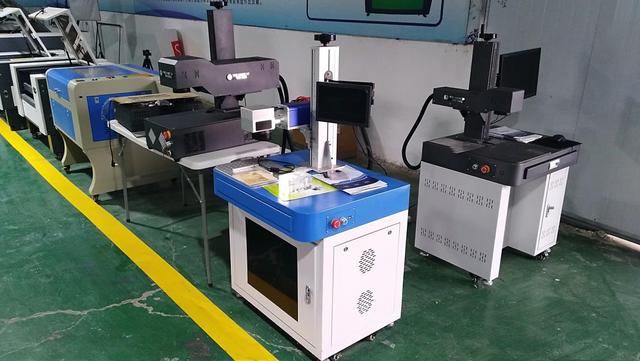
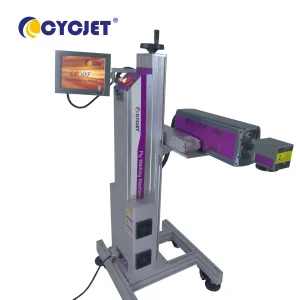
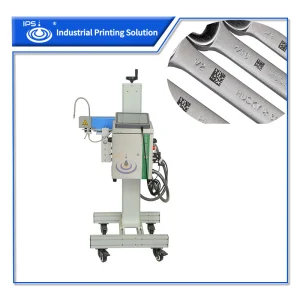
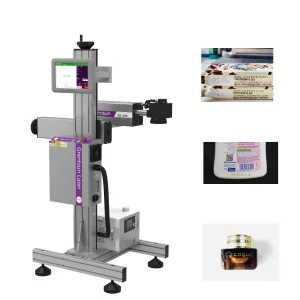
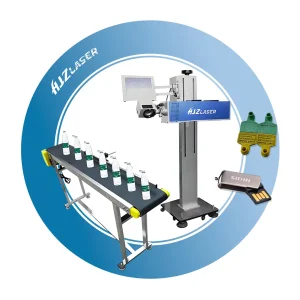
Explore our premium range of industrial UV, Fiber, and CO2 flying laser marking systems integrated for uninterrupted assembly lines.
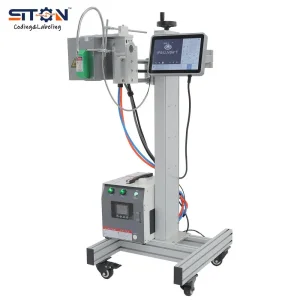
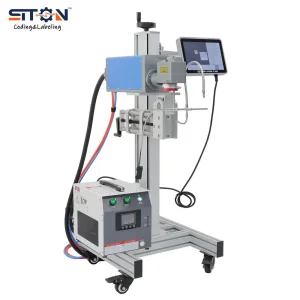
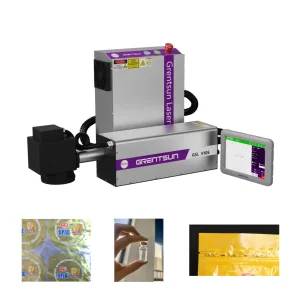
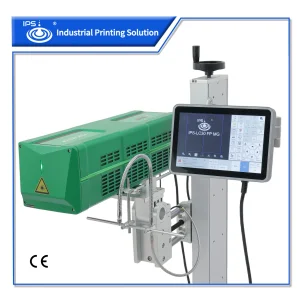
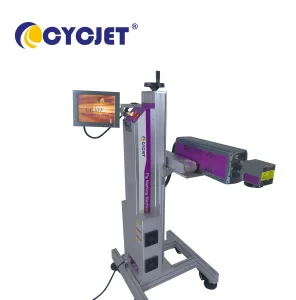
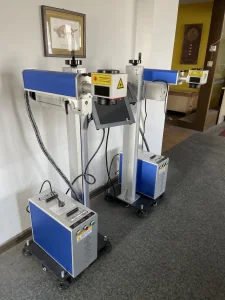
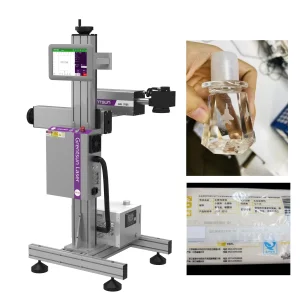
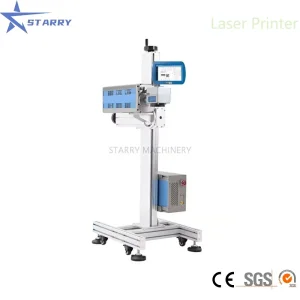
In modern manufacturing, traceability is no longer optional—it is a regulatory and operational cornerstone. From the serialization requirements of pharmaceutical packages to the real-time dynamic batch codes on consumer goods, product verification systems must keep pace with rapid manufacturing workflows. Historically, Continuous Inkjet (CIJ) printers were the default choice for inline coding. However, global manufacturing is experiencing a fundamental structural shift toward inline industrial laser systems, commonly known as online flying laser marking machines.
This transition is driven by three main operational parameters: total cost of ownership (TCO), reliability under continuous cycles, and environmental footprint. Traditional inkjet systems suffer from recurrent downtime due to nozzle clogging, ink viscosity changes under thermal flux, and the constant cost of consumables (solvent, ink, filters). In contrast, online laser coding systems operate as completely consumable-free units. Using solid-state fiber, gaseous CO2, or frequency-tripled UV laser sources, these systems apply localized, clean, permanent marks by altering the surface properties of the material directly.
"For modern manufacturing lines running 24/7, even 1% unplanned downtime due to maintenance of legacy marking systems translates to thousands of dollars in lost throughput. Industrial laser markers provide the necessary reliability to optimize Overall Equipment Effectiveness (OEE) across the assembly line."
Furthermore, global environmental regulations (such as RoHS, REACH, and domestic zero-waste policies) have scrutinized the solvents and chemical footprints associated with inkjets. Lasers represent a completely dry, non-contact, carbon-reduced alternative that integrates directly into smart factory SCADA systems for seamless Industry 4.0 data transmission.
Choosing the correct laser wavelength is critical to ensuring proper material absorption, marking contrast, and preventing micro-fractures in the product substrate.
| Laser Source Wavelength | Primary Substrates | Marking Method / Reaction | Ideal Industry Use Cases |
|---|---|---|---|
| Fiber Laser (1064nm) | Stainless steel, aluminum, brass, dense polymers, carbon fiber | Thermal annealing, ablation, surface engraving | Electronics packaging, automotive components, metal extrusion, optical fiber boards |
| CO2 Laser (10600nm) | PET, HDPE, wood, cardboard, glass, organic composites | Thermal vaporization, carbonization, melting | Food & Beverage bottling, carton printing, paper and sanitary pad packaging |
| UV Laser (355nm) | High-density plastics, thin films, medical glass, silicon wafers | Cold photochemical reaction (photo-ablation) without thermal stress | Pharmaceutical serialization, electronics micro-marking, flexible food films |
Among the core technologies, the UV laser (operating at 355nm) has become critical for high-end electronics and pharmaceuticals. Because its short wavelength carries high photon energy, it breaks the molecular bonds of the substrate directly, rather than relying on heat to vaporize or burn the material. This cold reaction ensures that thin packaging films (like those used on PET water bottles or sanitizing pads) do not experience micro-tears, punctures, or thermal distortion. The resulting high-contrast mark remains visible, legible for machine-vision scanners, and meets compliance standards without damaging the product package.
Based in Hangzhou, China, Hangzhou Kinray Laser Co., Ltd. is a leading industrial designer, developer, and exporter of high-precision fiber, UV, and CO2 online flying laser marking equipment. The company integrates research and development, custom mechanical assembly, and technical support to deliver robust laser marking systems designed for modern high-volume manufacturing environments.
Kinray Laser designs solutions that help businesses optimize production throughput and guarantee accurate product serialization. Our extensive portfolio contains versatile systems, including:
Kinray Laser serves diverse industries worldwide, including automotive parts, consumer electronics, medical device assembly, food packaging, aerospace engineering, and general metal fabrication. Whether working with metals, high-density polymers, industrial ceramics, or thin glass containers, Kinray Laser systems are built to provide consistent quality and reliable performance.
To support global partners, system integrators, and distributors, we offer flexible OEM and ODM configurations. Our engineering team assists from initial material compatibility testing through integration with existing factory PLCs and optical encoder systems, ensuring a smooth transition to automated laser coding.
Purchasing managers and integration engineers face a complex decision when sourcing online laser coding equipment. Standard off-the-shelf static laser engravers are not designed to withstand the high-vibration, high-dust, and constant speed variations of an inline manufacturing environment. To select a reliable manufacturer, consider the following parameters:
Online flying marking requires high-speed performance. The laser beam must track the movement of a fast-moving target on a conveyor. Kinray Laser systems utilize high-speed digital scanheads, enabling clear marking speeds up to 12,000 mm/s. When analyzing manufacturer specifications, evaluate the maximum line speed capability (measured in meters per minute, m/min) alongside the required character density. High-contrast codes should remain sharp at speeds exceeding 250 m/min.
A high-speed laser marker must integrate cleanly into the production line. Modern factories require controllers that support protocols like Modbus, Ethernet/IP, and TCP/IP. These systems must also connect to speed-tracking rotary encoders. The laser controller must dynamically calculate line speed changes, adjusting its pulse frequency in real-time to prevent distorted, compressed, or overlapping codes.
Industrial lines running multiple shifts demand cooling systems that can maintain stable temperatures. A quality laser manufacturer uses efficient thermal management. Fiber lasers typically rely on air-cooling structures, whereas high-power UV and CO2 systems use water-chilled loops. Kinray Laser equipment incorporates temperature sensors that monitor real-time thermal profiles, ensuring stable output power and protecting optical crystals from premature degradation.
Compliance is critical for global export. Kinray Laser ensures all export machinery complies with CE, FCC, and RoHS standards. Our UV and fiber laser markers are designed with integration options for Class 1 safety enclosures or Class 4 interlock systems. This keeps operators safe and meets international workplace safety guidelines.
Different materials and production speeds require customized configurations. Here is how Kinray Laser adapts technologies for specific markets:
Utilizing high-power, water-cooled CO2 flying lasers to mark glass and PET bottles. Our systems can code batch IDs, expiration dates, and lot numbers on curved surfaces, managing line speeds of up to 40,000 bottles per hour without bottlenecking.
For high-contrast 2D DataMatrix code serialization. We utilize 355nm UV laser systems that produce clean, smudge-free marks on HDPE bottles, blister foils, and sterile glass vials, helping facilities comply with FDA UDI regulations.
Our online fiber and UV lasers mark moving cables, pipes, and electrical conduit lines. They apply clear, permanent length indicators and logos directly to the outer insulation jackets at high production line speeds.
The manufacturing landscape continues to move toward automated, data-driven systems. Industrial coding machines are evolving from standalone devices into connected endpoints within digital networks. The future of online laser coding centers on three primary developments:
By pairing inline laser marking machines with high-resolution machine vision and AI software, systems can verify marking quality in real-time. If a code fails legibility checks due to substrate variations, the scanner detects the drop in contrast, notifies the PLC, and dynamically adjusts the laser's power or pulse frequency. This closed-loop configuration prevents coding defects, minimizes scrap, and maintains traceability.
Modern Kinray Laser systems connect directly to Manufacturing Execution Systems (MES) and ERP platforms. Remote telemetry lets operations managers monitor laser health, track diode temperatures, log cycle counts, and plan predictive maintenance schedules. This reduces unplanned downtime and extends the service life of optical modules.
As sustainability regulations tighten, companies are selecting technologies that reduce their environmental impact. Laser coding eliminates chemical waste, solvent fumes, and ink cartridge disposal. As power grid efficiency regulations adapt, our focus is on optimizing power consumption, ensuring our laser power supplies operate efficiently to lower energy use.
Expert answers to technical inquiries regarding the installation, maintenance, and operation of online laser coding systems.
A static laser engraver requires the product to remain stationary in a fixed enclosure during the marking cycle. In contrast, an online flying laser coding machine uses high-speed digital galvanometers and dynamic tracking algorithms to mark products as they move continuously along a conveyor belt. The system coordinates with rotary encoders to measure line speed, preventing code stretching or skewing.
As the line speed increases, the laser has less time to interact with the material. To maintain high contrast without burning the substrate, the system uses dynamic laser source control, high-frequency galvo scanners, and adjusted pulse widths. For high-speed lines (above 200 m/min), we recommend higher-power laser sources (e.g., 30W/50W fiber or 10W UV) to ensure clean contrast within a shorter cycle time.
Laser markers require minimal maintenance compared to inkjet systems. They do not use ink, solvents, or printheads. The primary maintenance tasks include periodic inspections, cleaning the protective F-theta scan lens to remove dust, and checking cooling filters. Fiber laser sources typically provide up to 100,000 operational hours before requiring major service.
Yes. The 355nm UV laser uses a cold photochemical reaction rather than heat to mark materials. This allows it to mark thin films, PET plastic bags, and delicate medical packaging without causing thermal damage, micro-cracks, or punctures. This is why UV lasers are widely used for marking sensitive packaging in the pharmaceutical and personal care industries.
Kinray Laser marking systems support standard industrial communication interfaces, including RS232, TCP/IP, and Modbus. They connect to standard PLC architectures (such as Siemens, Allen-Bradley, and Omron) via physical digital I/O lines and industrial network protocols. This allows you to remotely control marking templates, trigger events, and manage serial data.
Yes. Our systems support all standard 1D barcodes and 2D matrix configurations, including QR codes, DataMatrix, and GS1-128 code formats. The control software includes barcode generators that convert dynamic data fields (such as timestamp batch codes and incremental serial numbers) into high-resolution vector codes. These codes are optimized for industrial machine-vision verification cameras.
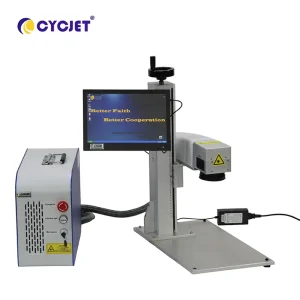
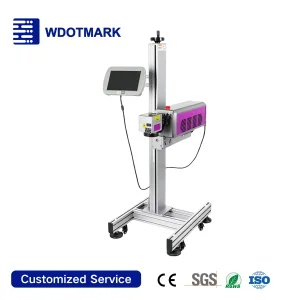
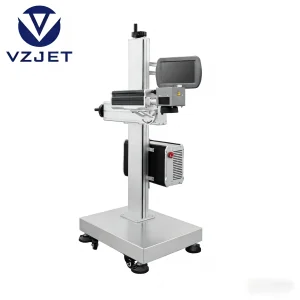
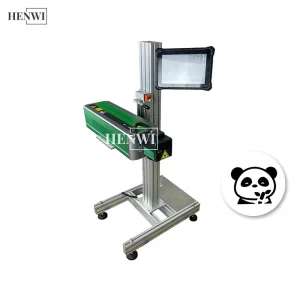
Explore our high-speed, dynamic industrial marking systems designed for integration into packaging lines.
 Kinray Laser