In the world of manufacturing and branding, the distinction between laser marking and laser engraving can be confusing. Experts like Dr. Emily Chen, a leading authority in laser technology, note, "Understanding the differences helps businesses choose the right process for their needs." The terms often overlap, yet they have unique characteristics.
Laser marking typically alters the surface of a material, creating a mark without removing material. This process often leaves a clear, high-contrast mark that is ideal for barcodes or serial numbers. In contrast, laser engraving involves removing material to create a deeper, permanent design. This method is favored for intricate designs on items like jewelry and awards.
When considering laser marking vs laser engraving, what is the difference? The answer lies in the technique used and the desired outcome. Each method has its strengths and challenges. Effective decision-making requires understanding these nuances. Investing in the wrong process can lead to losses or unsatisfactory results. Hence, clarity in this space is crucial for success.
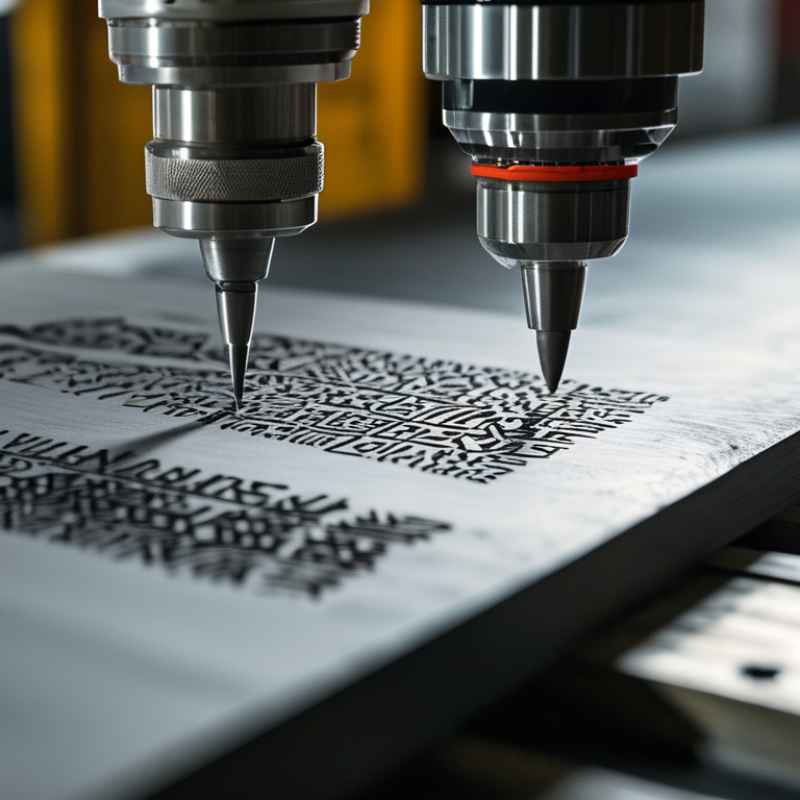
Differences in Techniques: Laser Marking vs Laser Engraving
Laser marking and
laser engraving serve different purposes,
though they often get confused. Both techniques utilize focused laser beams.
However, their applications diverge significantly, especially in industry and art.
Laser marking involves altering the surface layer of a material.
This process creates a color change or a shallow mark. It's often used for
barcodes, serial numbers, and logos. The detail is precise, making it suitable for a variety of materials
like plastics and metals. Yet, the depth is generally minimal. This can pose challenges
for durability in harsh environments.
On the other hand, laser engraving removes
a portion of the material to create a deeper design. This technique provides more
texture and visibility. It is ideal for artistic applications
and intricate designs. However, it may weaken the material's structure.
Understanding these distinctions is vital for choosing the right method for your
project. Each technique offers unique benefits and drawbacks.
Careful consideration is necessary to ensure the best outcome.
Applications of Laser Marking and Engraving Across Industries
Laser marking and engraving have found extensive applications across various industries. In the automotive sector, for example, the need for durable identification marks is crucial. Laser marking can inscribe part numbers and barcodes on metal components. A study by Allied Market Research indicates that the laser marking industry is projected to grow to $5 billion by 2024, largely driven by such industry needs.
In the electronics sector, laser engraving is often utilized for precise branding and tracing. This method allows for fine details that resist wear over time. A report from Markets and Markets highlights that the electronics industry accounted for nearly 30% of the global laser engraving market share in 2021. Additionally, the medical device industry increasingly adopts these technologies for compliance labeling, given the importance of traceability.
However, challenges remain. Achieving consistent quality can be complex. Variations in materials can affect the final output. It's also important to consider the environmental impact of laser operations. Sustainability practices in manufacturing are essential, yet they often face hurdles in implementation. Balancing efficiency and eco-friendliness is a topic for ongoing reflection.
Material Compatibility: What Can Be Marked or Engraved?
Laser marking and engraving serve distinct purposes. Understanding material compatibility is essential for their effective application. Various materials can be marked or engraved, depending on the laser type and settings. Common materials include metals, plastics, and wood. Metals like aluminum and stainless steel are ideal for engraving due to their durability. Plastics often work well with laser marking, leaving a permanent mark without altering the material’s structure.
When considering materials, always test first. Different lasers interact uniquely with materials. A lightweight plastic may melt under high settings, while a tougher metal responds better to high power. Sometimes, even slight adjustments in speed can affect quality. Keep this in mind to avoid costly mistakes.
It's not just about the material type; surface texture matters too. Smooth surfaces may yield clearer results than porous ones. Some materials, like glass, require specific settings to prevent cracking. If unsure, consult a material expert or try small samples before proceeding. Familiarity with materials enhances precision. Overall, knowing the capabilities of your laser system and its limitations is crucial for success in marking or engraving.
Laser Marking vs Laser Engraving: Material Compatibility
Cost Analysis: Comparing Expenses of Laser Marking and Engraving
When comparing laser marking and laser engraving, cost plays a significant role in decision-making. According to a recent industry report, laser marking systems can range from $5,000 to $20,000. Maintenance costs are relatively low but can add up over time. In contrast, laser engraving machines typically fall in the $10,000 to $50,000 range, with higher operational expenses. These expenses include not just equipment but also consumables.
Interestingly, while initial costs for engraving may seem steep, the longevity of engraved products can justify the investment. Engraving often results in deeper markings that withstand wear and tear. However, it's worth noting that not all projects require such durability. For simpler tasks, marking may suffice, saving time and costs. Precision also matters; less precise engraving methods might require more material handling, inflating overall expenses.
In the end, budget considerations are crucial. Both methods have their advantages and vulnerabilities. Careful analysis ensures that businesses select the right approach based on project requirements. Balancing the initial cost against long-term value is essential for ensuring a profitable outcome.
Durability and Longevity: How Do They Compare Over Time?
When comparing laser marking and laser engraving, durability and longevity are crucial factors to consider.
Laser marking typically alters the surface layer of an item. It can produce a clear, high-contrast mark that is resistant to fading. However, this method does not provide the same level of protection as engraving. Over time, marked surfaces may show signs of wear, especially in high-contact areas.
In contrast, laser engraving removes material from the substrate. This process creates deeper designs that are less likely to disappear. Engravings can withstand harsh environments, including exposure to chemicals and abrasives. If you need something that lasts, engraving may be the way to go. Yet, it’s important to examine the substrate; some materials do not engrave well.
Tips: For items exposed to the elements, consider engraving for maximum longevity. Test different materials to see which holds up under various conditions. Regularly check the surfaces of both marked and engraved items. Understanding their performance over time can guide better decisions in your projects.
FAQS
: Various industries, including automotive, electronics, and medical devices, use laser marking and engraving for identification and compliance.
Laser marking systems range from $5,000 to $20,000, while engraving machines typically fall between $10,000 and $50,000.
Engraving creates deeper markings that resist wear, making it a long-term investment for durability.
Yes, achieving consistent quality can be complex due to material variations, which can impact final outputs.
Environmental impact must be considered, but implementing sustainable practices can be challenging in manufacturing.
Laser markings are more prone to wear over time, while engravings remain intact longer in harsh conditions.
Budget, project requirements, and the material's performance impact the decision of which method to use.
Yes, some materials may not engrave well, so testing is vital to ensure quality results.
Monitoring the performance of marked and engraved items guides better choices about durability and longevity.
Conclusion
The article "Laser Marking vs Laser Engraving: What is the Key Difference?" explores the distinct techniques of laser marking and engraving, highlighting their unique applications across various industries. Laser marking involves altering the surface of the material, resulting in a mark that changes the color or appearance without removing any material, while laser engraving removes material to create deeper designs or images.
Additionally, the piece discusses material compatibility, pointing out the types of surfaces that can be marked or engraved, as well as providing a cost analysis to compare the expenses associated with each method. Durability and longevity are also evaluated, with insights into how both processes hold up over time. Overall, understanding "laser marking vs laser engraving what is the difference" can help in choosing the right method for specific project needs, considering efficiency and outcome quality.

 Kinray Laser