The global industrial landscape is undergoing a seismic shift from subtractive manufacturing to Directed Energy Deposition (DED) technologies. Laser Cladding, at its core, is a sophisticated metallurgical process that uses a high-intensity laser beam to melt a filler material (powder or wire) onto a substrate. This creates a metallurgical bond with minimum dilution from the substrate, resulting in superior wear resistance, corrosion protection, and structural integrity. As of 2024, the market for "Laser Cladding Systems" is projected to grow at a CAGR of 9.2%, driven by the aerospace, mining, and oil & gas sectors seeking to extend the lifecycle of high-value components.
Leading exporters, particularly from China, have revolutionized this sector by integrating AI-driven path planning and real-time melt pool monitoring, making high-precision cladding accessible to medium-sized enterprises globally. This whitepaper explores the technological nuances that distinguish the world's top 10 factories and why companies like Hangzhou Kinray Laser Co., Ltd. are becoming the preferred partners for Fortune 500 industrial giants.
Extreme High-Speed Laser Application (EHLA) allows for coating speeds up to 500 meters per minute. This is replacing traditional hard chrome plating, which faces increasing environmental regulations (REACH compliance) due to Hexavalent Chromium risks.
Modern systems utilize 6-axis KUKA or ABB robotic arms paired with 2-axis positioners to enable 8-axis synchronized movement. This allows for complex cladding on non-linear geometries such as turbine blades and drill bits.
The future lies in intelligent systems that use thermal cameras and pyrometers to adjust laser power in real-time. This ensures a consistent "Melt Pool," preventing thermal deformation even on thin-walled components.
Combining laser cladding with CNC machining in a single cell. This "One-Stop" approach allows for the restoration of worn parts and final machining without removing the workpiece, drastically reducing lead times.
Hangzhou Kinray Laser Co., Ltd. is a leading China industrial laser manufacturer specializing in advanced fiber and UV laser solutions for global manufacturing industries. With a strong focus on innovation, precision, and intelligent manufacturing, Kinray Laser is committed to delivering high-performance laser equipment that improves production efficiency and product traceability.
Located in the heart of China's high-tech hub, Hangzhou, the company integrates R&D, manufacturing, and global logistics. Our extensive product portfolio includes fiber laser marking machines, UV laser marking systems, and high-power laser cladding modules designed for extreme industrial environments.
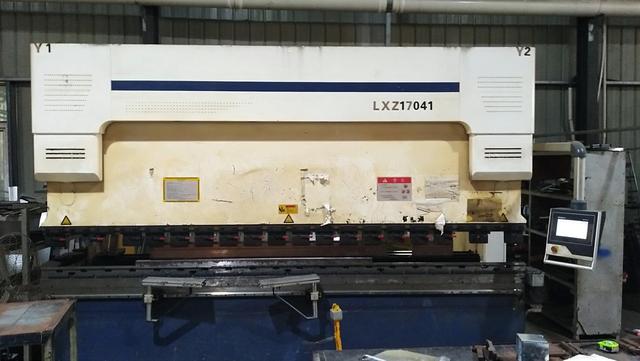
Repairing drill collars and stabilizers subjected to extreme abrasive wear in sandy oil fields. Laser cladding with Stellite or Tungsten Carbide extends part life by 300%.
Applying high-thermal conductivity coatings to EV battery cooling plates and enhancing the wear resistance of brake discs to meet Euro 7 brake emission standards.
On-site refurbishment of hydraulic cylinders and massive gearbox shafts for heavy mining machinery, reducing "Down-Time" costs that can exceed $50k per hour.
Precision repair of aero-engine turbine blades and landing gear components using superalloys (Inconel 718) with minimal heat-affected zones (HAZ).
The "China Advantage" in laser cladding systems is no longer just about cost; it's about ecosystem speed. In clusters like Hangzhou and Suzhou, a laser manufacturer can source high-power diode stacks, precision powder feeders, and CNC controllers within a 50km radius. This vertical integration allows for:
Moving from design to functional cladding system in under 4 weeks.
Proximity to Ningbo and Shanghai ports ensures 24-hour dispatch for spare parts.
Capability to ramp up production from 10 units to 100 units per month to meet sudden global demand.
| Feature | Laser Cladding (Kinray System) | Traditional Arc Welding (PTA) | Thermal Spray (HVOF) |
|---|---|---|---|
| Metallurgical Bond | Excellent (Strongest) | Good | Mechanical Bond (Weaker) |
| Heat Input | Very Low (Minimum Distortion) | High (Risk of Warping) | Moderate |
| Coating Thickness | 0.5mm - 5mm (Multi-layer) | > 2mm | < 0.5mm |
| Dilution Rate | < 5% | 15% - 30% | N/A |
| Automation Level | Fully Robotic/AI Integration | Manual/Semi-Auto | Automated |
 Kinray Laser