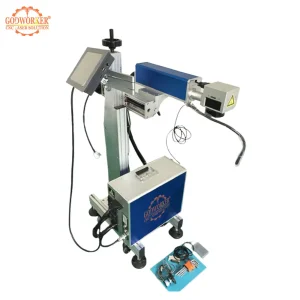
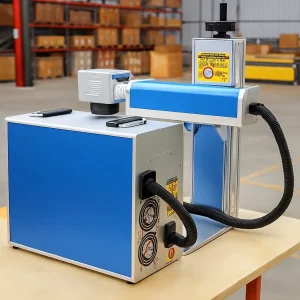
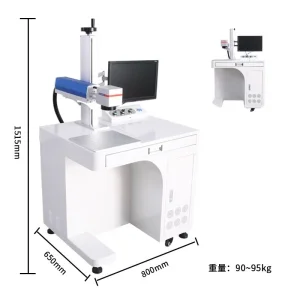
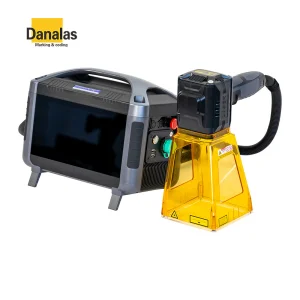
High-performance CNC, Fiber, UV, and CO2 systems pre-configured with CE-compliant software suites
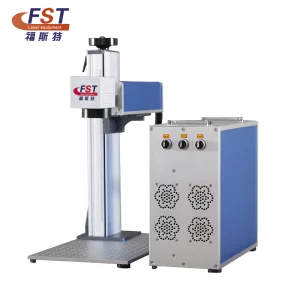
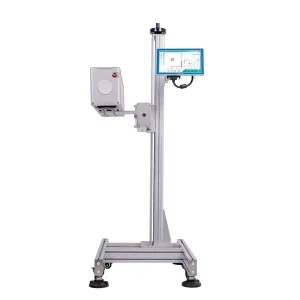
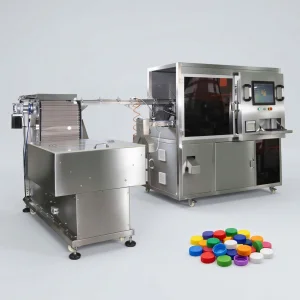
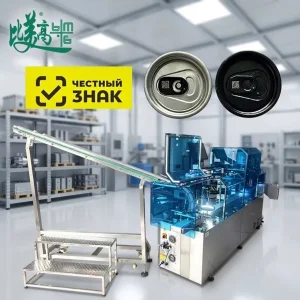

In modern industrial manufacturing, laser hardware is only as capable as the software control layer governing it. As factories transition to fully automated, data-driven smart manufacturing (Industry 4.0), the requirements for software controlling fiber, UV, and CO2 laser machines have shifted. It is no longer sufficient to merely execute vector translations. Today’s industrial manufacturers demand software systems that ensure safety compliance, absolute kinematic precision, and seamless interconnectivity across Enterprise Resource Planning (ERP) and Manufacturing Execution Systems (MES).
Compliance with the European Conformity (CE) marking framework represents the baseline of technical safety, operational reliability, and risk mitigation for European and global markets. A certified software control interface for laser systems guarantees strict compliance with directives like Machinery Directive 2006/42/EC, EMC Directive 2014/30/EU, and laser-specific standards such as EN ISO 11553-1 and EN 60825-1. At Hangzhou Kinray Laser Co., Ltd., we develop and integrate software layers designed to operate in highly demanding industrial configurations, guaranteeing both technical performance and regulatory compliance.
When Tier-1 suppliers and OEMs source industrial laser marking or engraving systems, the software suite undergoes rigorous evaluation by safety officers, IT architects, and production managers. Enterprise procurements are driven by a distinct set of operational criteria:
Direct communication via Modbus TCP/IP, OPC UA, or RS232 protocols, allowing automated MES triggers to update laser serialization parameters on the fly without human intervention.
Real-time monitoring of shutter states, galvanometer deviations, and water-cooling loop feedback loops, shutting down the beam source instantly upon fault detection.
Native parsing of aerospace UID specifications, medical UDI standards (GS1 barcodes), and automotive matrix marking algorithms directly on the host controller CPU.
In addition, procurement teams demand clean version control software and backward compatibility guarantees. Equipment deployed in automated lines cannot afford to suffer from breaking API changes or unexpected driver conflicts. At Kinray Laser, our software platform utilizes hardware abstraction layers, ensuring that updating a computer or upgrading a laser source does not render the production interface obsolete.
Industrial applications necessitate a hybrid software-hardware approach. The mechanics of light modulation and galvanometer movement require optimized driving algorithms to match the physical characteristics of different materials. Below, we break down how Kinray's CE-certified control software configures various laser modalities for global industrial tasks.
| Industry Sector | Material Focus | Laser Modality | Software & Algorithmic Focus |
|---|---|---|---|
| Automotive OEM | Alloys, Hardened Steel, Engine Blocks | High-Power Fiber Laser Marking (30W-100W) | Real-time thermal control, deep engraving tracking, and 2D matrix micro-machining with deformation compensation. |
| Medical & Biotech | Implantable Metals, Polymers, Glass | Precision UV Laser (3W-10W) | Ultra-low heat distortion algorithms, barcode validation checks (OCR), and sterile verification database logging. |
| Beverage Packaging | PET Bottles, Aluminum Caps, Glass | High-Speed Online Flying CO2/Fiber | Dynamic rotary encoder tracking, real-time trigger compensation, and line speed synchronization up to 300m/min. |
| Aerospace Electronics | Flexible PCBs, Silicon, Shielding | MOPA / UV Laser Processing | Variable pulse-duration waveform modulation, precise multi-pass ablation control, and high-aspect-ratio routing. |
By defining standard software interfaces (API libraries) across all these modalities, Kinray enables factories to run different laser types (e.g., a CO2 marking laser alongside a fiber laser engraver) using a unified operator workspace. This minimizes training costs and reduces configuration errors on the production line.
In high-speed processing environments, such as inline bottling packaging or micro-chip marking, latency between the trigger sensor and the laser galvanometer is a critical constraint. Kinray's control software addresses this by running time-critical tasks on real-time operating systems (RTOS) embedded directly on the motion card, bypassing Windows OS scheduling overheads.
Key technical components of the Kinray Laser system control design include:
Moreover, our software includes an active SDK supporting C++, C#, and Python. This allows developers to construct custom front-end applications, retrieve real-time status diagnostics, and directly stream mark files in vector format (DXF, PLT) to the machine buffer.
For manufacturers selling products in the European Economic Area (EEA), safety compliance is a legal necessity. CE marking on a laser marking machine is a declaration that the system meets strict safety standards. In the domain of software and electronics control, the safety chain is defined by several standards:
EN ISO 13849-1 (Safety of Machinery - Safety-related parts of control systems): Kinray Laser software operates in tandem with dual-channel emergency stop hardware to achieve Performance Level d (PL-d). This design guarantees that a software crash or memory leak cannot compromise the system's ability to safe-stop the laser power supply.
EN 60825-1 (Safety of laser products): A CE-compliant controller must manage shutter interlocks and key-switch configurations. Our control software tracks open enclosure signals and automatically restricts power output when safety doors are opened, turning the system from Class 4 (open operation) to Class 1 (fully enclosed operation).
EMC Directive (Electromagnetic Compatibility): Industrial environments are subject to high levels of electromagnetic noise from servo drives and heavy machinery. Kinray's USB/Ethernet card interfaces feature optical isolation, shielding the software control commands from high-voltage EMI and preventing corruption of marking patterns.
Based in Hangzhou, China, Hangzhou Kinray Laser Co., Ltd. is a professional industrial laser marking machine manufacturer specializing in advanced fiber, UV, and CO2 laser systems. Our business integrates research and development, manufacturing, global sales, and technical support. Our broad product portfolio includes fiber laser marking machines, UV laser systems, CO2 laser marking systems, MOPA laser markers, flying laser systems, 3D laser equipment, and automated production solutions.
Kinray Laser products are widely deployed in the automotive, electronics, medical, precision hardware, jewelry, packaging, and aerospace sectors. Designed for high-speed, high-precision, and permanent marking applications, our systems are capable of processing a wide range of materials, including metals, plastics, ceramics, glass, and composite materials.
To support global customers, we offer flexible OEM and ODM services for distributors, system integrators, and equipment brands. Our engineering team works closely with customers to develop custom laser solutions tailored to specific production requirements, automation needs, and industry applications.
Answers to engineering and compliance questions regarding Kinray Laser control systems
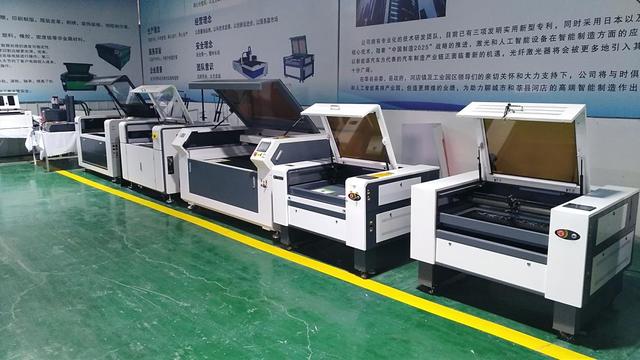
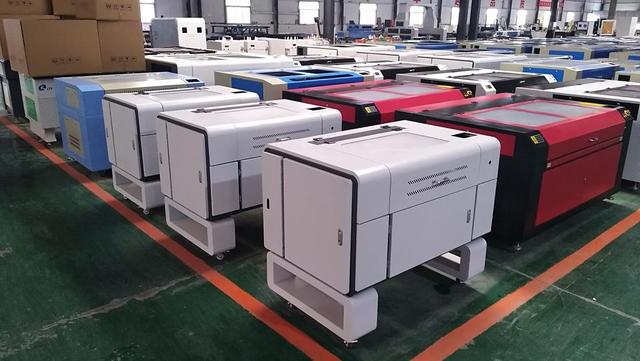
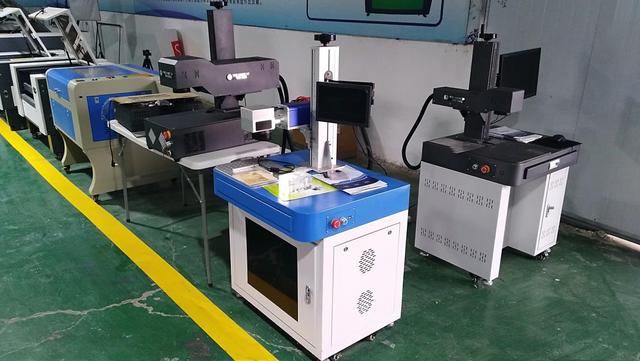
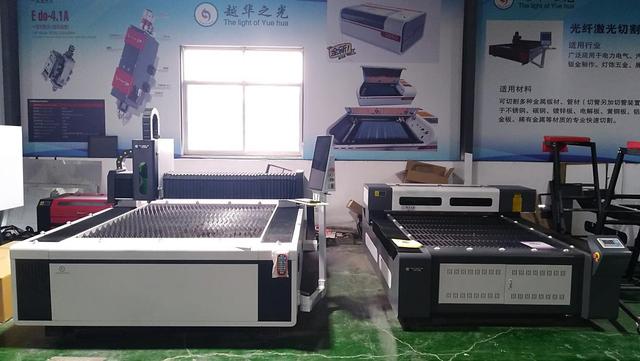
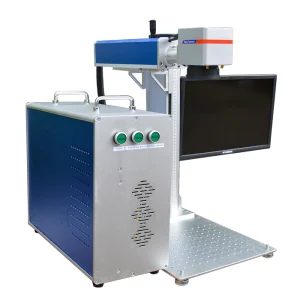
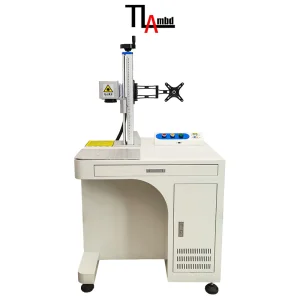
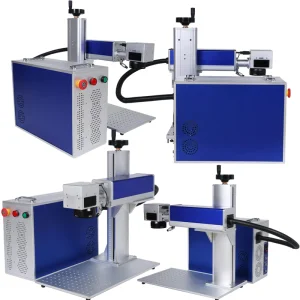
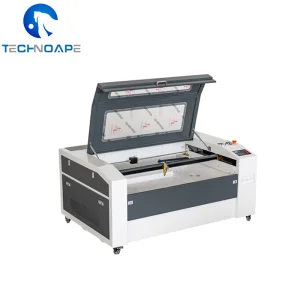
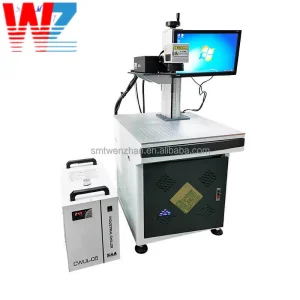
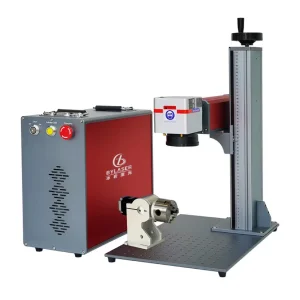
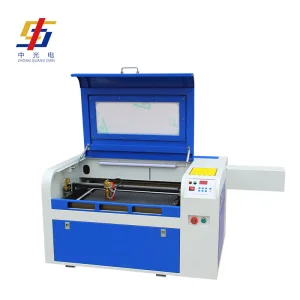
Explore our specialized CO2, Fiber, and UV systems configured for global production safety standards
 Kinray Laser