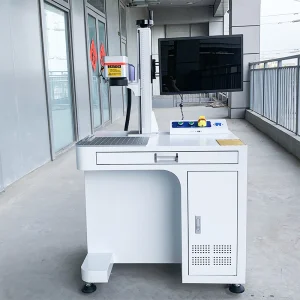
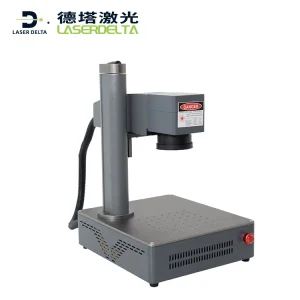
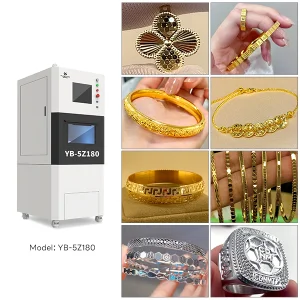
Explore our leading industrial configuration models, specifically aligned to meet the rigorous precision guidelines of the Philadelphia jewelry, optical, and fine metalware industry.
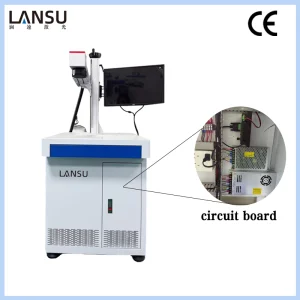

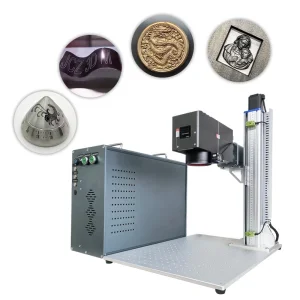
Philadelphia, Pennsylvania, is home to Jewelers' Row, the oldest diamond district in the United States, located on Sansom Street. Today, this historic center is undergoing a rapid technological evolution. Artisans, bespoke jewelers, and manufacturing ateliers are increasingly shifting from manual chasing, rotary tooling, and mechanical stamping to high-precision laser marking. Modern consumers demand instant personalization, intricate micro-inscriptions inside ring bands, and flawless markings on precious metals including platinum, 18K gold, sterling silver, and titanium.
Beyond retail, the broader Delaware Valley and Philadelphia metropolitan area serve as critical hubs for biomedical engineering, medical device manufacturing, and aerospace components. In these advanced sectors, material traceability is not just an aesthetic choice—it is a legal requirement. Direct Part Marking (DPM) utilizing non-contact fiber lasers guarantees that micro-scale components receive permanent, high-contrast, bio-compatible identifiers, barcodes, and serial keys without compromising the structural integrity of the substrate.
To remain competitive in the Philadelphia market, local businesses require high-performance hardware that minimizes operational overhead. Sourcing jewelry laser markers directly from China's primary industrial laser manufacturing base in Hangzhou presents an optimized balance of cost and engineering sophistication. By bridging Chinese factory direct pricing with top-tier components (such as IPG, Raycus, and JPT laser sources), companies can deploy high-spec Galvo scanning systems for a fraction of the cost of local domestic aggregators.
Hangzhou Kinray Laser Co., Ltd. has established robust export pipelines specifically structured to serve East Coast businesses. By understanding regional compliance, FCC standards, and FDA CDRH regulations, our systems ship ready to plug into Pennsylvania workshops, complete with local-language software presets, intuitive GUI layouts, and pre-calibrated parameters for standard jewelry metals.
Choosing the correct wavelength, pulse frequency, and power level determines the structural success of precious metal processing. Read our breakdown below to optimize your shop's procurement strategy.
MOPA (Master Oscillator Power Amplifier) lasers offer adjustable pulse duration parameters. Unlike traditional Q-switched fiber lasers, MOPA allows jewelers to mark high-contrast black colors on anodized aluminum and a wide spectrum of colors on titanium and stainless steel. It provides minimal heat-affected zones (HAZ) on delicate gold and silver alloy bands.
Operating at a 355nm ultraviolet wavelength, UV lasers perform photo-ablation rather than thermal melting. This is highly recommended for ultra-delicate materials, crystal glass packaging, polymers, and synthetic gemstones. Because it prevents micro-cracks, it is ideal for luxury watch crystals and custom glass jewelry bottles.
By pairing fiber and UV sources with digital high-speed galvanometer scanning mirrors, processing speed can exceed 8000mm/s. This allows high-throughput custom engraving of rings, bracelets, serial plates, and hallmarks without bottlenecking production lines during high-demand retail cycles.
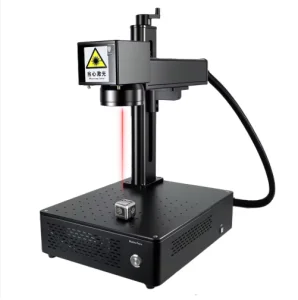
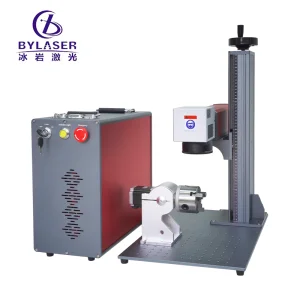
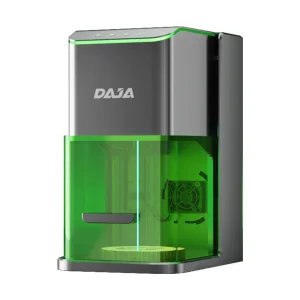
The global jewelry industry is witnessing a significant shift toward full digital integration. In the past, laser engraving was treated as a separate, manual post-production process. Today, advanced workshops in Philadelphia are integrating laser systems directly with CAD software (like RhinoGold, MatrixGold, and 3Design) using standardized vector file transfers (DXF, PLT, AI). This enables rapid design-to-prototype workflows where a custom 3D printed wax model is cast, polished, and immediately loaded into a fiber laser machine with pre-set focal settings for hallmark placement.
Another major trend is the introduction of multi-axis rotary modules. Ring engraving inside and outside curves requires synchronized rotation to avoid aspect-ratio distortion. Modern 5-axis jewelry engraving centers rely on specialized software math to dynamically adjust the galvo mirror deflection angle in real-time, matching the contour of complex ring geometry. This mitigates visual skewing and ensures deep, clean material ablation that stands the test of time, wear, and chemical exposure.
operating laser machinery within the Commonwealth of Pennsylvania requires compliance with Occupational Safety and Health Administration (OSHA) regulations as well as the laser safety guidelines defined by ANSI Z136.1. When procuring from overseas factories, local buyers must ensure the equipment features interlocked safety enclosures, emergency stop circuits, and proper protective shielding windows matching the wavelength (e.g., OD 6+ protection for 1064nm fiber emission).
Furthermore, precious metal processing releases toxic particulate fumes and nano-scale dust, especially during high-power cutting or deep marking. An integrated fume extraction unit equipped with pre-filters, HEPA filters, and activated carbon stages is critical. By capturing gold and silver dust at the nozzle source, ateliers can protect the operator's health while reclaiming precious metal residues, offsetting the capital cost of the laser unit itself over time.
Engineered for high-volume commercial workshops, industrial parts manufacturers, and premium jewelry studios across the Greater Philadelphia Area.
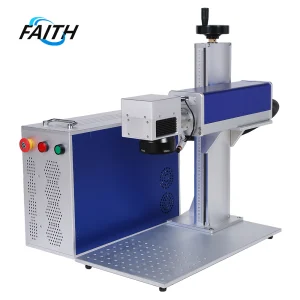
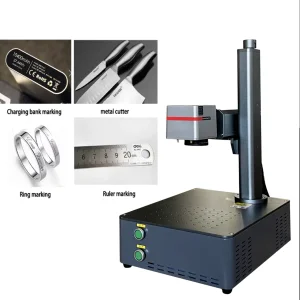
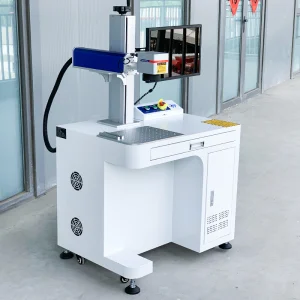
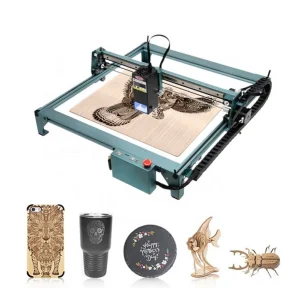
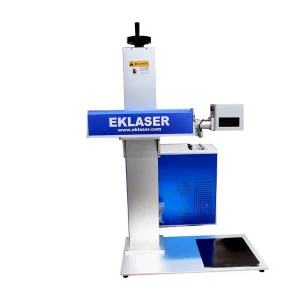
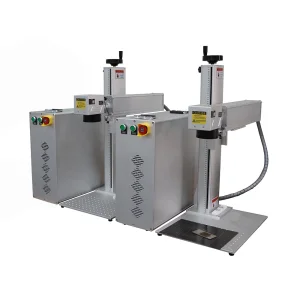
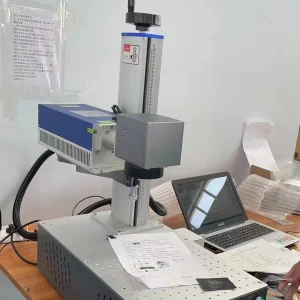
A global leader in advanced industrial laser marking systems, bridging intelligent research and development with localized client deployment.
Hangzhou Kinray Laser Co., Ltd. is a leading China industrial laser marking machine manufacturer specializing in advanced fiber and UV laser solutions for global manufacturing industries. With a strong focus on innovation, precision, and intelligent manufacturing, Kinray Laser is committed to delivering high-performance laser equipment that improves production efficiency, product traceability, and marking quality.
Located in Hangzhou, China, the company integrates research and development, manufacturing, sales, and technical support to provide comprehensive laser processing solutions for customers worldwide. Our extensive product portfolio includes fiber laser marking machines, UV laser marking machines, CO2 laser marking systems, MOPA laser markers, flying laser marking machines, 3D laser marking equipment, and customized automated laser solutions.
Kinray Laser products are widely used in electronics, automotive, medical devices, precision hardware, jewelry, packaging, aerospace, consumer goods, and industrial manufacturing industries. Designed for high-speed, high-precision, and permanent marking applications, our systems are capable of processing a wide range of materials, including metals, plastics, ceramics, glass, and composite materials.
Equipped with advanced production facilities and rigorous quality management systems, Kinray Laser maintains strict quality control throughout every stage of manufacturing. Each machine undergoes comprehensive testing to ensure stable performance, reliability, and compliance with international standards.
To support global customers, we offer flexible OEM and ODM services for distributors, system integrators, equipment brands, and industrial manufacturers. Our experienced engineering team works closely with customers to develop customized laser solutions tailored to specific production requirements, automation needs, and industry applications. Driven by technological innovation and customer satisfaction, Hangzhou Kinray Laser Co., Ltd. continues to expand its global presence and strives to become a trusted partner for intelligent laser processing solutions.
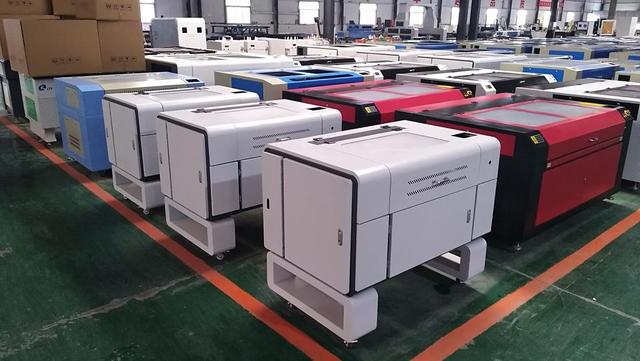
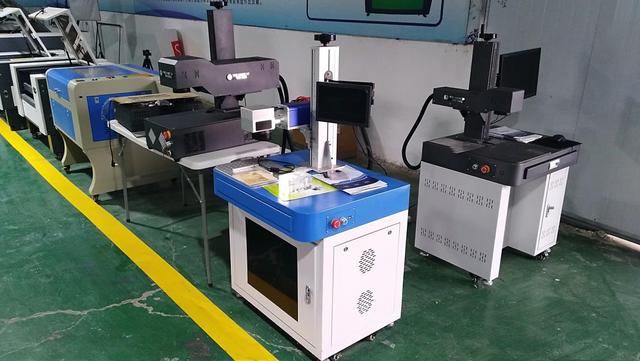
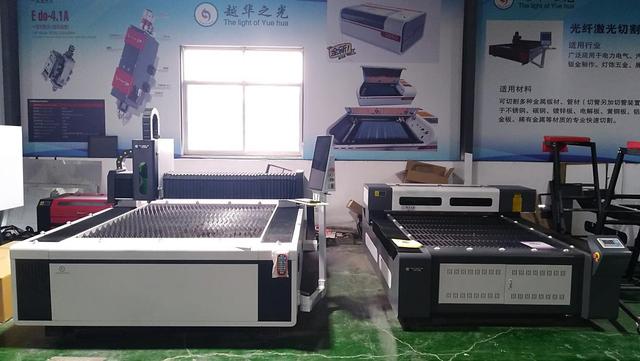
Key insights on hardware configurations, international import logistics, and optimization guidelines for local Pennsylvania workshop owners.
For orders shipped to Pennsylvania, cargo usually arrives through the Port of Philadelphia (Packer Avenue Marine Terminal) or the Port of New York & New Jersey, or via air freight into PHL (Philadelphia International Airport). Kinray Laser supports DDP, CIF, and FOB terms. We supply all commercial paperwork, HS Codes (specifically HS 84561100 for laser-operated machinery), and FDA registration credentials to ensure smooth clearance through US Customs and Border Protection.
MOPA lasers allow the user to modify pulse widths (ranging from 2ns to 500ns) independently of pulse repetition frequencies. On metals like silver and gold, standard Q-switched lasers often leave rough, micro-burned edges due to excessive thermal conduction. By using short pulses, a MOPA laser vaporizes metal with high precision, leaving smooth micro-hallmarks that do not require aggressive post-engraving polishing. It is also the only reliable method to create oxide color layers on titanium design bands.
Our machines are pre-calibrated and ship with standard EasyCad or LightBurn compatibility. These software systems support common vector file formats like DXF, PLT, AI, DWG, and BMP, allowing jewelers to easily transfer designs from design software such as CorelDraw, AutoCAD, or Illustrator directly to the laser controller. The system connects via a simple USB or ethernet port to standard Windows computers.
For simple surface marking of names, dates, and micro-hallmarks inside gold and silver rings, a 20W or 30W fiber laser is highly efficient. However, if your workshop performs deep engraving (for personalized signet rings or coin molds) or laser cutting (for delicate silver pendants), we recommend selecting a 50W, 60W, or 100W fiber laser to decrease processing time and ensure high-throughput capacity.
Get a custom quote, request material processing tests on your sample metals, or configure a customized automation system tailored to your Philadelphia production line.
Send Inquiry Now Kinray Laser