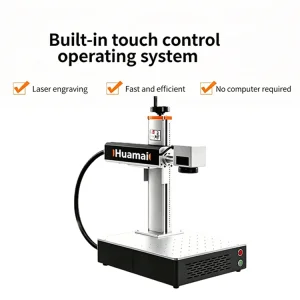
Laser marking technology has transitioned from primitive vector drawing engines to intelligent, integrated manufacturing software systems. At the heart of every fiber, UV, and CO2 laser system lies the Laser Marking Software. This software bridges the gap between digital data—such as vector designs, dynamic databases, variable 2D barcodes, and serialized tracking sequences—and physical laser controllers (like USB/PCI control cards, galvo scanner heads, and laser sources).
Modern manufacturing requires high speed, precision, and integration. Software solutions are no longer standalone desktop utilities; they are mission-critical components integrated with factory Manufacturing Execution Systems (MES) and Enterprise Resource Planning (ERP) platforms. Whether coding beverage lids at 100 meters per minute or engraving medical tools with micro-scale Unique Device Identification (UDI) marks, control software dictates the throughput, accuracy, and compliance of the marking setup.
The industrial laser field is undergoing rapid shifts driven by digital transformation, machine learning, and hardware efficiency. The following trends define the next generation of laser control architectures:
Real-time machine vision alignment allows software to detect part placement and adjust rotation, scaling, and offset instantly. This reduces tooling costs and increases yields in electronics manufacturing.
Newer platforms run directly on edge controllers. They interface with PLCs via Ethernet/IP, Modbus, and OPC UA protocols, eliminating the need for dedicated industrial PCs at every station.
To comply with medical and aerospace standards (e.g., FDA 21 CFR Part 11), software must track all modifications, maintain secure user logins, and log every laser firing cycle.
This curated list profiles the leading software suites and integrated system builders setting standards for precision, compatibility, and speed.
Origin: China | Core Software: EzCad2, EzCad3 (64-bit)
EzCad is one of the most widely used laser marking applications globally. Compatible with JCZ control boards (LMC/DLC series), it supports 2D and 3D galvo control, multi-axis motion, flying marking (marking-on-the-fly), and diverse graphics file formats (PLT, DXF, DST, SVG, BMP, JPG). EzCad3 introduces 64-bit multithreading and enhanced 3D dynamic focusing control.
Origin: Germany | Core Software: SAMLight, SAM 3D
SCAPS is a developer of high-performance laser marking software and controller cards (USC boards). SAMLight is standard in European high-end automotive and medical industries due to its reliability, sophisticated API interface, and precise calibration files, enabling system integrators to build custom user interfaces.
Origin: Germany | Core Software: BeamConstruct
BeamConstruct is a CAD-focused control program designed to operate on Windows, Linux, and macOS. It features comprehensive layout creation tools, scriptable interfaces (C# and Python), and support for multiple controller boards, making it popular in academic and custom OEM projects.
Origin: Japan | Core Software: Marking Builder 3 / 3D
Keyence integrates software and hardware. Their Marking Builder software facilitates 3D surface mapping, auto-focus settings, and visual validation. It is designed for seamless operation with Keyence's line of fiber, CO2, and UV lasers on manufacturing assembly lines.
Origin: Germany | Core Software: TruTops Mark / QuickFlow
TruTops Mark combines laser marking design and sequence control in one package. It offers CAD drawing capabilities, database connectivity, and QuickFlow—a flowchart-style programming tool for designing process sequences without deep coding knowledge.
Origin: USA | Core Software: EtherMark / MeccoMark
Mecco specializes in connecting laser marking systems to factory automation networks. Their software integrates with PLC systems over EtherNet/IP or PROFINET protocols, allowing factories to manage marking files and serialized data without separate industrial PCs.
Origin: USA / UK | Core Software: Minilase Pro / Laserlyte
Minilase Pro provides a clean, user-friendly interface suited for quick setups. It manages 2D codes, serialization, and graphic imports, with strong integrations for automated part-feeding systems and rotary axes.
Origin: France | Core Software: Gravostyle / LaserTrace
Gravostyle provides software for both rotary engraving and laser marking. It serves jewelry, gift-personalization, and industrial manufacturing industries, featuring a database of material parameters for simplified laser settings adjustment.
Origin: Austria | Core Software: Ruby
Ruby is a web-based, collaborative software platform. It allows users to design, prepare, and execute jobs from any device on the network. Ruby integrates vector graphics tools with direct job queue management for modern digital fabrication workflows.
Origin: China | Core Integration Focus: Intelligent Laser Controllers & Automation Software
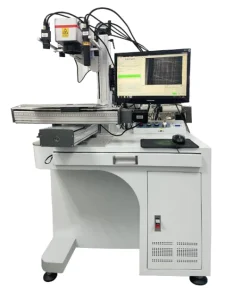
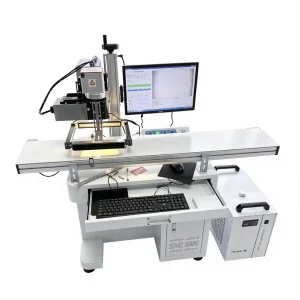
Kinray Laser stands out by pairing high-performance hardware (fiber, UV, and CO2 lasers) with custom-tailored controller interfaces and software configurations. Offering robust SDKs and API support, Kinray allows system integrators to configure automated marking sequences, verify 2D matrices using machine vision, and implement high-speed packaging operations.
When selecting laser marking software or an integrated manufacturer, procurement teams should evaluate products based on integration capability, flexibility, and compliance rather than cost alone:
Customized software configurations help optimize laser systems for distinct industry application requirements:
Direct Part Marking (DPM) on structural cast iron, anodized aluminum, and titanium requires high-contrast 2D DataMatrix codes. Software for this sector features distortion correction algorithms (spherical correction for curved parts) and interfaces directly with factory quality assurance scanners to verify grade-A code quality before moving to the next assembly step.
Precision is critical for sub-millimeter marks on delicate silicon substrates, glass wafers, and PCB boards. Software systems integrate with high-resolution CCD cameras for micro-positioning and feature laser pulse energy control to avoid micro-cracks and thermal damage to sensitive electronic circuits.
Medical tools demand deep, corrosion-resistant marks that withstand repeated sterilization cycles. The control software must manage Unique Device Identification (UDI) sequences, track process parameters, and log operator IDs to meet FDA regulations.
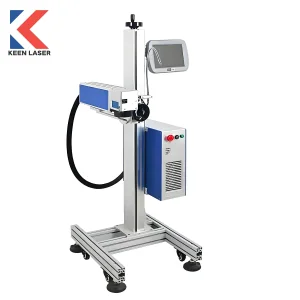
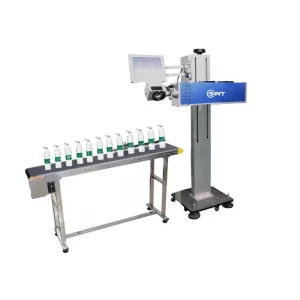
On packaging lines running at high speeds, laser software utilizes encoders to measure line velocity dynamically. It adjusts galvo scanning speeds (Marking-on-the-Fly) in real-time, preventing text elongation or compression on moving bottles, cans, and cartons.
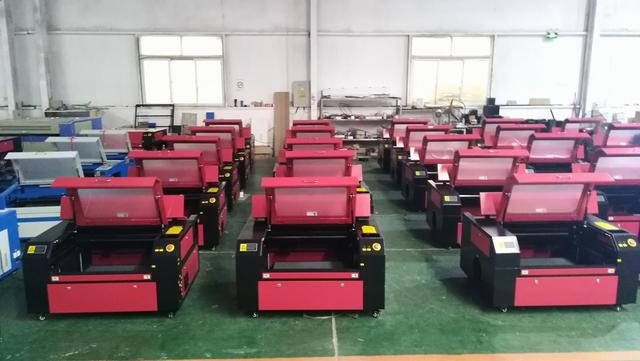
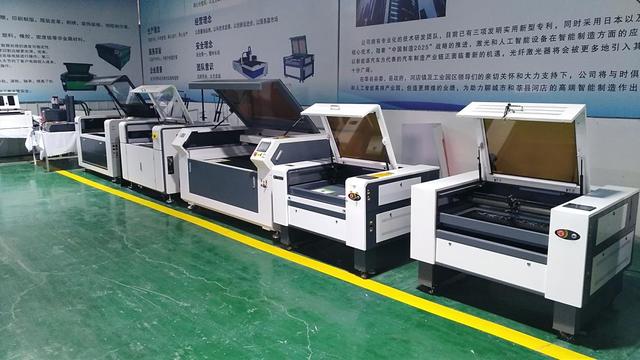
Hangzhou Kinray Laser Co., Ltd. is a China-based industrial laser marking machine manufacturer, specializing in advanced fiber, UV, and CO2 laser solutions for global manufacturing industries. With a strong focus on innovation, precision, and intelligent manufacturing, Kinray Laser is committed to delivering high-performance laser equipment that improves production efficiency, product traceability, and marking quality.
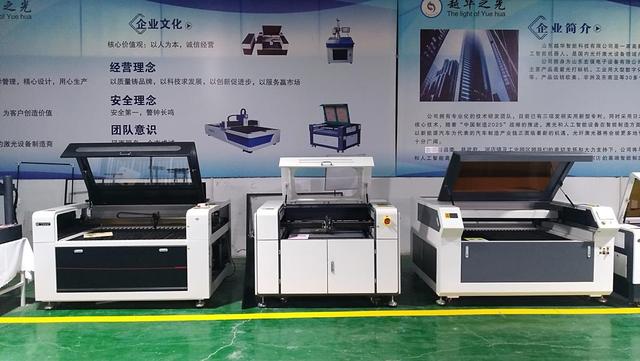
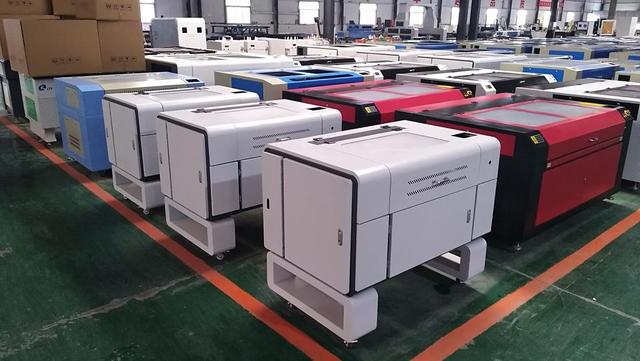
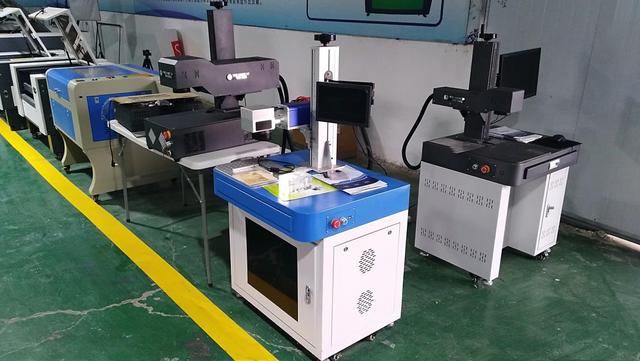
Located in Hangzhou, China, the company integrates research and development, manufacturing, sales, and technical support to provide comprehensive laser processing solutions for customers worldwide. Our extensive product portfolio includes fiber laser marking machines, UV laser marking machines, CO2 laser marking systems, MOPA laser markers, flying laser marking machines, 3D laser marking equipment, and customized automated laser solutions.
Kinray Laser products are widely used in electronics, automotive, medical devices, precision hardware, jewelry, packaging, aerospace, consumer goods, and industrial manufacturing industries. Designed for high-speed, high-precision, and permanent marking applications, our systems are capable of processing a wide range of materials, including metals, plastics, ceramics, glass, and composite materials.
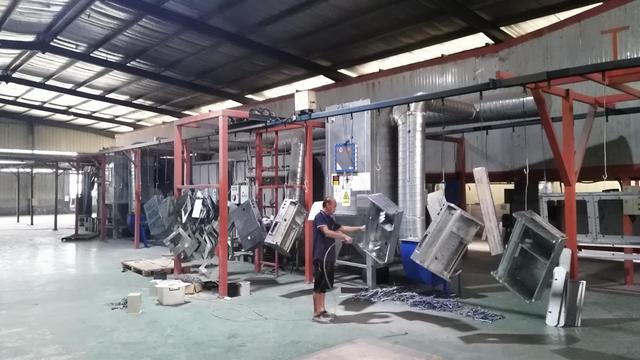
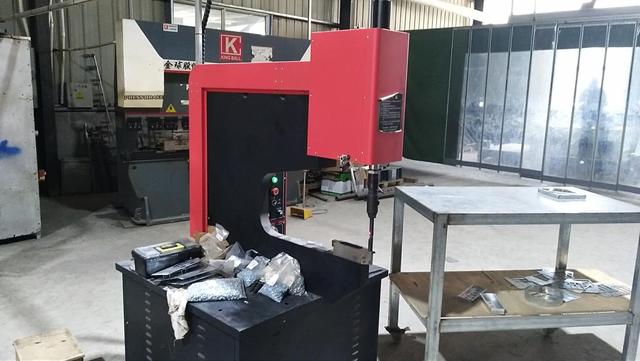
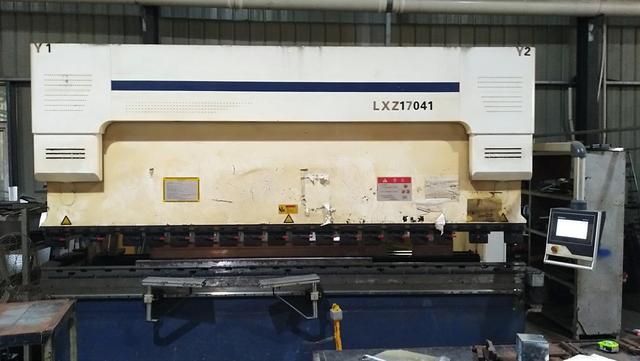
Equipped with advanced production facilities and rigorous quality management systems, Kinray Laser maintains strict quality control throughout every stage of manufacturing. Each machine undergoes comprehensive testing to ensure stable performance, reliability, and compliance with international standards.
To support global customers, we offer flexible OEM and ODM services for distributors, system integrators, equipment brands, and industrial manufacturers. Our experienced engineering team works closely with customers to develop customized laser solutions tailored to specific production requirements, automation needs, and industry applications.
Driven by technological innovation and customer satisfaction, Hangzhou Kinray Laser Co., Ltd. continues to expand its global presence and strives to become a trusted partner for intelligent laser processing solutions, helping manufacturers achieve smarter, more efficient, and sustainable production.
As smart factories adopt Industry 4.0 methodologies, the development pipeline for laser marking control systems centers on three technical fronts:
Future control setups will likely shift from dedicated, motherboard-specific drivers to unified, platform-independent control systems. This transition will allow the same software engine to run across desktop, embedded, and mobile platforms without losing real-time galvo synchronization capabilities.
Integrating sensors and vision systems within the scan head allows software to monitor marking quality in real-time. By reading the thermal feedback and optical reflection of each pulse, the system can adjust power dynamically to achieve uniform depth even across uneven raw materials.
Future iterations of vector processing software are expected to employ machine learning algorithms to calculate optimal paths. By minimizing non-marking galvo travel paths and adjusting jump delays based on historical movement models, these systems can reduce cycle times on complex designs.
 Kinray Laser