A comprehensive examination of optical hazard classification, emission thresholds, and compliance structures governing industrial laser installations.
In modern industrial manufacturing, laser-based processing is ubiquitous. From high-speed fiber laser marking systems to highly precise UV engraving units, coherent light provides unmatched throughput and flexibility. However, the concentration of optical energy introduces critical physical risks to operators, primarily targeting ocular structures and epidermal tissues. To facilitate global trade and guarantee worker safety, harmonized regulatory frameworks define the legal requirements for laser equipment integration.
The structural cornerstone of laser safety regulation globally is the international standard IEC 60825-1 (harmonized in the European Union as EN 60825-1). This standard establishes a risk-classification hierarchy based on Accessible Emission Limits (AEL). Concurrently, in the United States, the Food and Drug Administration (FDA) regulates radiation-emitting devices through the Center for Devices and Radiological Health (CDRH) under 21 CFR Part 1040.10 and 1040.11. While historical discrepancies existed between these two major systems, recent alignments under Laser Notice No. 50 allow manufacturers to demonstrate compliance with FDA standards by adhering to IEC requirements.
Note on Accessible Emission Limits (AEL): The AEL represents the maximum level of laser radiation to which human access is permitted within a specific class. Determining the AEL requires precise evaluation of the laser wavelength, exposure duration, and viewing geometry (such as looking through magnifying optics).
Under EN 60825-1, laser devices are grouped into classes depending on the risk they present to human tissue. The major classes utilized in heavy industrial marking, engraving, and cutting applications include:
| Class | Hazard Characteristics | Typical Industrial Deployment Scenario |
|---|---|---|
| Class 1 | Safe under reasonably foreseeable conditions of operation. Eye safe. | Enclosed cabin workstations, integrated factory-floor inline markers. |
| Class 2 | Ocular protection is afforded by natural aversion responses, including blink reflexes. | Low-power visible alignment lasers (e.g., red guide lasers, target pointers). |
| Class 3R | Direct viewing of the beam is potentially hazardous, but the risk of injury is low. | Precision metrology sensors, high-accuracy alignment projectors. |
| Class 3B | Direct intrabeam viewing is hazardous. Diffuse reflections are generally safe. | Laboratory diagnostic systems, low-power research setups. |
| Class 4 | Highly hazardous. Direct or specular reflection exposure is dangerous to eyes/skin. | Bare laser marking engines (Fiber, CO2, UV) prior to systemic integration. |
For any manufacturer deploying a laser system, calculation of the MPE (Maximum Permissible Exposure) is essential. The MPE defines the maximum level of laser radiation to which a person may be exposed without hazardous effects. MPE values are set by safety authorities and vary depending on the wavelength of the radiation and the exposure time. Parallel to the MPE, engineers calculate the NOHD (Nominal Ocular Hazard Distance). The NOHD represents the space along the optical axis of the beam within which the irradiance exceeds the MPE of the human eye. Outside the NOHD zone, direct viewing of the beam is no longer considered hazardous to unprotected eyes.
A deep dive into the mandatory directives required for CE certification of industrial laser machinery in the EU Single Market.
For a manufacturer or supplier to legal distribute industrial laser processing machinery within the European Economic Area (EEA), the equipment must bear the CE (Conformité Européenne) mark. The CE mark is not a single safety certification but a declaration that the machine complies with all applicable European directives. In the context of industrial laser machinery, compliance requires a multi-faceted engineering approach to fulfill several directives simultaneously.
Specifies requirements for machinery design, mechanical stability, functional safety interlocks, risk assessment, and standard-compliant technical documentation.
Applies to electrical equipment designed for use within specific voltage limits (50–1000V AC or 75–1500V DC). Ensures electrical safety and insulation reliability.
Controls electromagnetic emissions of the laser power source and control system, ensuring the machine does not disrupt nearby equipment, and maintains high electromagnetic immunity.
Furthermore, the integration of safety controls must adhere strictly to ISO 13849-1 ("Safety-related parts of control systems"). This standard evaluates the Performance Level (PL) achieved by a control system's safety-related components. Under modern risk assessments, industrial laser safety mechanisms (such as optical interlocks on enclosure doors or emergency stop circuits) must typically achieve a minimum of PL d or PL e. To reach these performance levels, manufacturers utilize redundant dual-channel safety relays, force-guided contacts, and continuous diagnostic monitoring of safety devices to ensure that a single component failure cannot lead to the loss of safety functionality.
A leading manufacturer of advanced industrial laser solutions specializing in high-performance compliance, R&D, and custom system integration.
Hangzhou Kinray Laser Co., Ltd. is a leading China industrial laser marking machine manufacturer specializing in advanced fiber and UV laser solutions for global manufacturing industries. With a strong focus on innovation, precision, and intelligent manufacturing, Kinray Laser is committed to delivering high-performance laser equipment that improves production efficiency, product traceability, and marking quality.
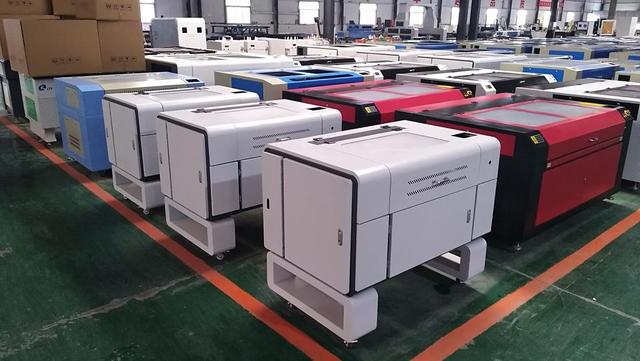
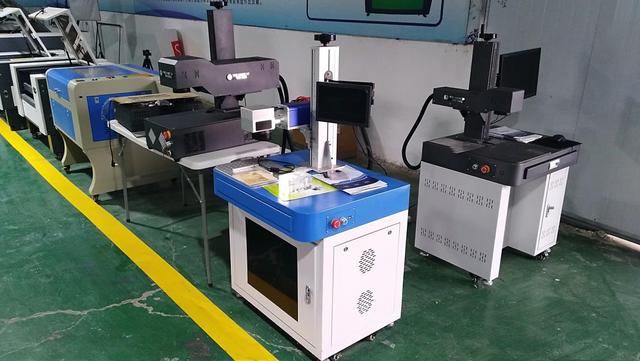
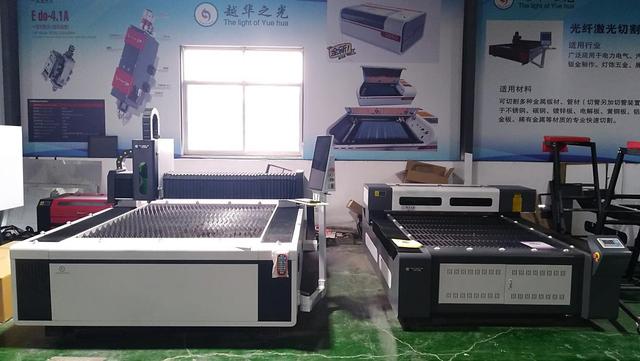
Located in Hangzhou, China, the company integrates research and development, manufacturing, sales, and technical support to provide comprehensive laser processing solutions for customers worldwide. Our extensive product portfolio includes fiber laser marking machines, UV laser marking machines, CO2 laser marking systems, MOPA laser markers, flying laser marking machines, 3D laser marking equipment, and customized automated laser solutions.
Kinray Laser products are widely used in electronics, automotive, medical devices, precision hardware, jewelry, packaging, aerospace, consumer goods, and industrial manufacturing industries. Designed for high-speed, high-precision, and permanent marking applications, our systems are capable of processing a wide range of materials, including metals, plastics, ceramics, glass, and composite materials.
Equipped with advanced production facilities and rigorous quality management systems, Kinray Laser maintains strict quality control throughout every stage of manufacturing. Each machine undergoes comprehensive testing to ensure stable performance, reliability, and compliance with international standards.
To support global customers, we offer flexible OEM and ODM services for distributors, system integrators, equipment brands, and industrial manufacturers. Our experienced engineering team works closely with customers to develop customized laser solutions tailored to specific production requirements, automation needs, and industry applications.
Driven by technological innovation and customer satisfaction, Hangzhou Kinray Laser Co., Ltd. continues to expand its global presence and strives to become a trusted partner for intelligent laser processing solutions, helping manufacturers achieve smarter, more efficient, and sustainable production.
An in-depth analysis of structural safety design requirements, optical filtration density, and safety monitoring subsystems.
Transforming a high-hazard Class 4 laser engine into an operationally safe, fully compliant Class 1 laser system requires dedicated engineering protective measures. This is achieved by combining structural physical barriers, optical filtration, and dynamic control safety loops. The principal design criteria center on ensuring that no laser radiation exceeding the Class 1 AEL is accessible during regular machine operation.
A fundamental protection method is the physical isolation of the laser path within a light-tight safety enclosure. For operator safety, observation windows must integrate specific absorption dyes. These dyes are engineered to filter out hazardous laser wavelengths while transmitting safe visible light, enabling real-time monitoring of the laser process. These windows are certified based on their Optical Density (OD) at the laser’s operating wavelength.
Optical Density is a logarithmic scale measuring the attenuation of light passing through an optical filter. For example, an OD6 filter reduces the transmission of a specified wavelength by a factor of 106 (1,000,000 times). The required OD rating for a window depends directly on the output power, wavelength, and spot focus of the integrated laser source.
| Laser Source Wavelength | Industrial Application | Standard Enclosure Window Requirement | Minimum Optical Density (OD) |
|---|---|---|---|
| Fiber Laser (1064 nm) | Metal marking, deep engraving, high-speed coding | Certified Mineral Glass / Specialized Acrylic (OD6+) | OD6+ @ 1060–1080 nm |
| UV Laser (355 nm) | Glass etching, plastic cable marking, high-precision electronics | Amber/Dark Orange Polycarbonate (OD6+) | OD6+ @ 355 nm |
| CO2 Laser (10600 nm) | Organic material coding (wood, leather, acrylic) | Standard Clear Acrylic or Polycarbonate (OD4+) | OD4+ @ 10600 nm |
To prevent accidental exposure to Class 4 radiation when access panels or doors are opened, safety enclosures must incorporate fail-safe safety interlock switches. These switches are linked directly to the main laser power control circuit. When a door is opened, the interlock system breaks the power circuit of the laser generator or closes a mechanical safety shutter, blocking the beam line within milliseconds.
Under ISO 13849-1, industrial laser machinery must feature dual-channel interlocks monitored by a safety control unit to prevent single points of failure. In addition, physical safety is supported by clear warning indicators. A prominently visible Laser Emission Status Indicator must turn on before and during any laser output, giving operators clear notice that the system is active.
Analyzing how different global regions enforce laser safety standards across key manufacturing sectors.
As manufacturing lines become more globally integrated, compliance strategies must adapt to the regional regulations of the target market. A system built for a European facility must conform to the Machinery Directive and display the CE mark, while equipment entering the United States must meet FDA CDRH filing requirements and comply with ANSI Z136.1 standards. In Canada, systems must align with CSA Z386, and in the Chinese domestic market, they must meet the mandatory GB 7247.1 standards. Recognizing these regional variations is vital for equipment suppliers and manufacturing companies running production facilities across different countries.
Permanent traceability marks on engine casings and safety components. These setups require Class 1 enclosures integrated into automated robotic production cells, including safety interlocked transfer gates.
Requires UDI (Unique Device Identification) codes directly marked on stainless steel surgical tools. This process must not contaminate the material or compromise structural integrity, and must use completely enclosed, clean-room compliant Class 1 workstations.
Inline flying laser coding systems marking expiration dates on PET bottles and paperboard cartons. Because the line is open, safety design relies on light-blocking tunnels and shielding baffles to prevent scattered light from reaching nearby workers.
To meet these localized requirements, Hangzhou Kinray Laser Co., Ltd. incorporates comprehensive compliance features directly into its engineering design. Our export systems are built with international standards in mind, utilizing dual-channel safety relays, certified optical viewing windows, and integrated emergency-stop loop controls. This approach makes it easier for global integrators to incorporate our systems directly into local compliance workflows.
A forward-looking perspective on the integration of artificial intelligence, real-time diagnostics, and active monitoring systems in laser processing.
Industrial laser safety is evolving from passive physical barriers toward active, intelligent safety networks. As manufacturing facilities adopt Industry 4.0 standards, safety systems are moving beyond simple mechanical switches to become data-driven, network-aware environments.
Instead of relying solely on physical enclosures, next-generation systems integrate AI-powered vision networks. These cameras monitor the safe zone around a laser system, automatically shutting down operation if an operator enters the path of the beam.
For high-power megawatt lasers, passive walls are sometimes insufficient. Active barrier systems feature integrated sensor loops inside the enclosure panels. If the laser drifts and hits the wall, the sensor detects the thermal rise or electrical change and cuts off the power before the beam can burn through the panel.
IoT-connected safety modules track performance data across interlocks, emergency stop loops, and fume extraction systems. These modules identify mechanical wear and performance degradation, alerting maintenance teams before a safety component fails.
Expert technical answers to common regulatory, safety, and integration questions for industrial laser systems.
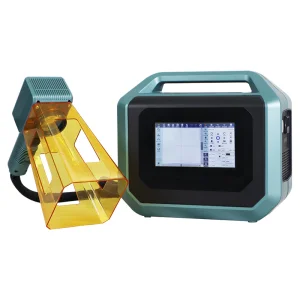
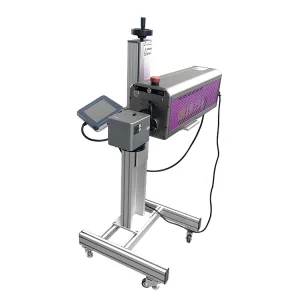
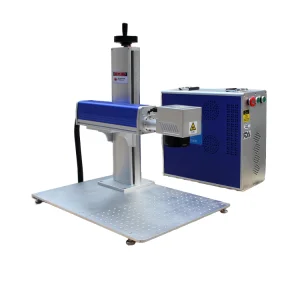
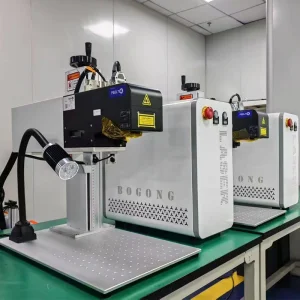
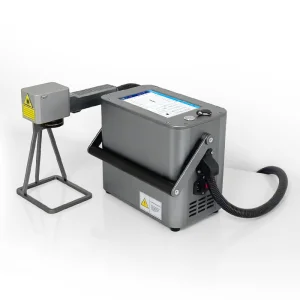
Hangzhou Kinray Laser Co., Ltd. continuously monitors updates to international safety directives. Our engineering processes are designed to support our global distributors and integrators in meeting local laser safety requirements.
 Kinray Laser