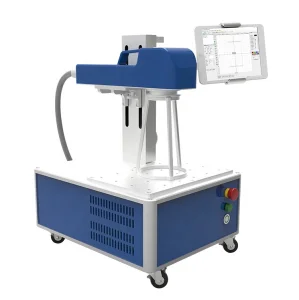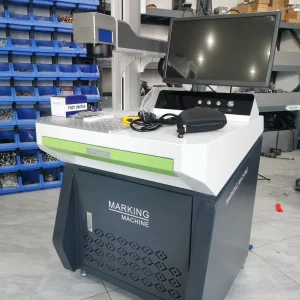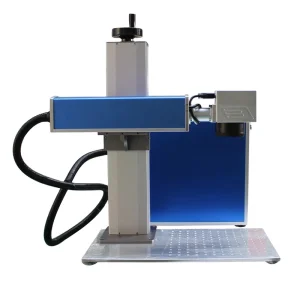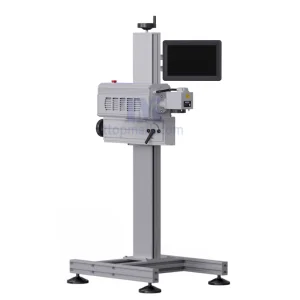
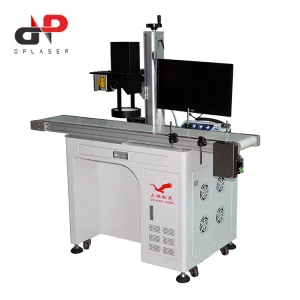
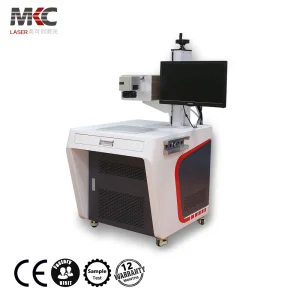
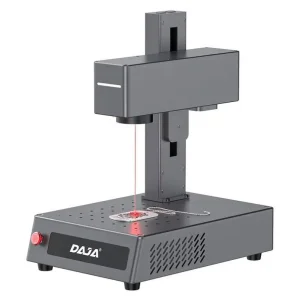
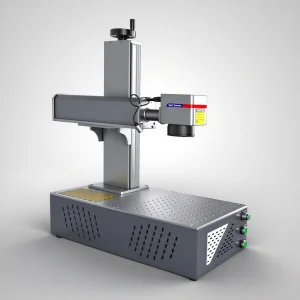
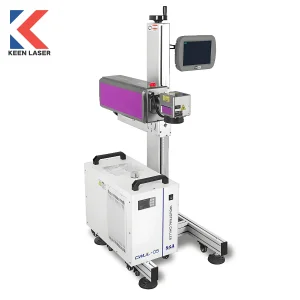
Hangzhou Kinray Laser Co., Ltd. is a leading China industrial laser marking machine manufacturer specializing in advanced fiber and UV laser solutions for global manufacturing industries. With a strong focus on innovation, precision, and intelligent manufacturing, Kinray Laser is committed to delivering high-performance laser equipment that improves production efficiency, product traceability, and marking quality.
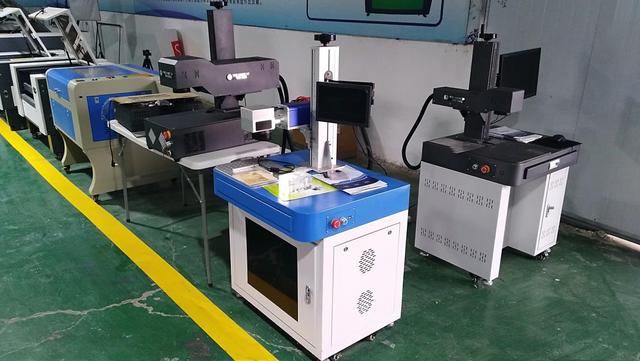
Located in Hangzhou, China, our corporation integrates comprehensive research and development, manufacturing, sales, and technical support to provide complete laser processing solutions for customers worldwide. Our extensive product portfolio includes fiber laser marking machines, UV laser marking machines, CO2 laser marking systems, MOPA laser markers, flying laser marking machines, 3D laser marking equipment, and customized automated laser solutions.
Kinray Laser products are widely used in electronics, automotive, medical devices, precision hardware, jewelry, packaging, aerospace, consumer goods, and industrial manufacturing industries. Designed for high-speed, high-precision, and permanent marking applications, our systems are capable of processing a wide range of materials, including metals, plastics, ceramics, glass, and composite materials.
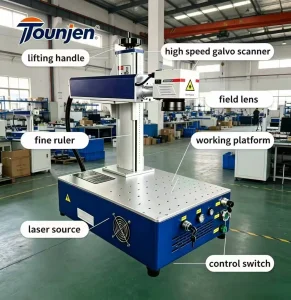
A laser scanning system, commonly referred to as a galvanometer scanner or optical beam steering system, is the technological heart of industrial laser marking and engraving machinery. The system relies on high-speed, motor-driven mirrors to steer the laser beam in two dimensions (X and Y axes). This process is guided by complex digital servo drivers that convert digital design files (such as vector graphics in DXF or PLT formats) into micro-rotational movements.
For international manufacturing enterprises, procuring a CE Certified Laser Scanning System is not merely a box-ticking exercise; it is an absolute requirement for operational safety, electromagnetic compatibility, and equipment durability. CE Certification verifies that the scanning system meets the harmonized European standards for machinery safety (specifically Machinery Directive 2006/42/EC) and electromagnetic emissions (EMC Directive 2014/30/EU). Without these assurances, factory operators risk component failure, signal interference, and hazardous optical emissions.
Advanced temperature stabilization circuits inside the galvo driver boards minimize positional drift during continuous multi-shift operation, preserving marking alignment.
Double-shielded galvanometers prevent external electromagnetic frequencies from inducing micro-jitter in the optical scanning axis.
Dustproof and splash-resistant housing options prevent particulates in industrial settings from settling on optical surfaces.
For systems integrators and safety officers at international manufacturing sites, compliance is the single most critical factor when selecting a supplier. A laser system operates as a Class 4 open optical radiation hazard or a Class 1 fully enclosed workstation. To satisfy rigorous safety guidelines under EN ISO 11553-1 and standard machinery protection rules, a laser scanner must offer:
| Regulatory Protocol | Core Requirement | Kinray Laser Factory Standard |
|---|---|---|
| 2006/42/EC (Machinery Directive) | Risk assessment, safety interlocks, physical guards. | Dual safety shutters, interlock-equipped enclosures, emergency stop loops. |
| 2014/30/EU (EMC Directive) | Zero radio frequency disruption to surrounding automated systems. | Optoisolated control signals, professional industrial chassis grounding. |
| EN 60825-1 (Laser Safety) | Rigorous classification of optical emission levels. | Class 1 fully-enclosed visual windows, amber wavelength protection shields. |
| CDRH / FDA Accession | Mandatory registration for import and distribution in North America. | Active FDA accession numbers provided with custom export document packages. |
Kinray Laser addresses localization needs by designing systems that integrate directly into existing assembly lines. This is achieved using standardized mounting geometries, standardized power inputs (110V/220V 50-60Hz), and industrial fieldbus communication options like EtherCAT, Profinet, or traditional RS232/USB serial links.
China's manufacturing landscape has transitioned from basic assembly to high-precision engineering. The Yangtze River Delta, particularly the Hangzhou-Shanghai high-tech corridor, is home to a robust optoelectronics industrial cluster. This concentration of expertise offers several advantages:
By manufacturing galvanometer scanners, optical mirror mountings, and digital driver electronics in-house or sourcing them from certified regional suppliers, Kinray Laser maintains control over quality and cost. This allows us to supply high-end, CE-marked laser systems at competitive prices.
Our engineering team can modify structural layouts, specify specialized optics coatings, and implement customized software interfaces quickly. This fast turnaround is supported by a local supply chain that can manufacture prototypes within days, a process that might take months in other regions.
To ensure reliability, Kinray Laser integrates critical components from global industry leaders, including Sino-Galvo scanning mirrors, IPG/Raycus/JPT laser sources, and Meanwell power supplies. This approach combines international engineering standards with cost-efficient domestic assembly.
The industrial laser sector is moving rapidly toward automation, digitalization, and closed-loop process control. Factories looking to update their machinery should consider several emerging developments:
Rather than using static F-theta lenses, dynamic focusing units use an active Z-axis optical shifting stage. This allows the system to adjust focal length in real time, enabling precise marking on 3D curves, inclined planes, and complex surfaces.
By mounting a coaxial or off-axis CCD camera above the galvanometer scanner, the system can automatically locate, align, and check the orientation of parts. This is ideal for high-speed marking of irregular or randomly positioned items.
Modern production facilities require machinery to communicate with MES and SCADA systems. Our scanning software supports OPC UA protocol interfaces, enabling status tracking, warning diagnostics, and data collection.
These technologies help manufacturers minimize errors, reduce setup times, and limit the need for dedicated positioning jigs. The result is a more flexible production line capable of handling variable product runs with minimal downtime.
 Kinray Laser