Explore our premium selection of fully integrated industrial laser marking and vision inspection cells, designed to operate continuously under the demanding conditions of São Paulo's leading packaging and manufacturing lines.
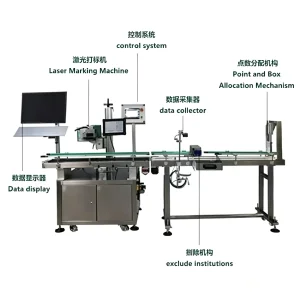


São Paulo stands as the undisputed engine of South America's industrial economy, housing advanced manufacturing belts in regions like Campinas, Sorocaba, the ABCD area, and Vale do Paraíba. Driven by high-velocity sectors such as automotive Tier-1 manufacturing, pharmaceuticals (RDC 301 compliance under ANVISA), cosmetics, and large-scale food & beverage bottling, the demand for reliable integrated laser marking systems has reached critical thresholds.
Historically, manufacturers relied on traditional continuous inkjet (CIJ) systems. However, volatile operational expenses (OPEX) stemming from solvents, inks, and regular preventative maintenance downtime have pushed procurement teams to adopt non-contact optical coding technologies. Our fiber, UV, and CO2 integrated systems eliminate consumables completely while providing indelible, permanent high-resolution markings that guarantee item-level traceability throughout the supply chain.
In São Paulo's humid sub-tropical climate, direct part marking (DPM) must withstand not only rigorous post-production autoclaving and sterilization processes in medical applications but also condensation in cold-fill beverage lines. The precision engineered systems from Hangzhou Kinray Laser Co., Ltd. address these dynamic atmospheric and substrate variables, delivering consistent optical density, contrast, and edge sharpness.
From ultra-fast fiber laser modules for heavy metal marking to robotic-assisted pick-and-place lines, these integrated machines are calibrated to meet complex material handling requirements.
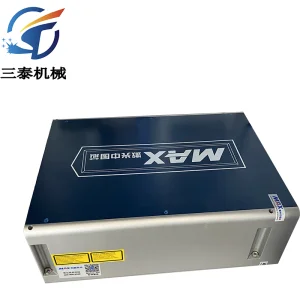
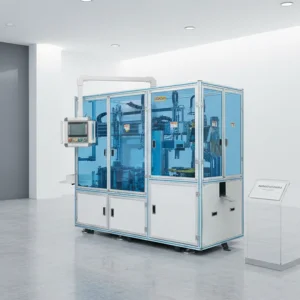
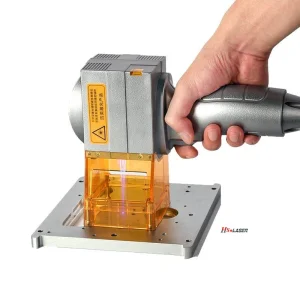
Deploying an integrated laser marking machine in modern automated ecosystems requires complex compatibility with local factory standards, network topologies, and high-velocity materials handling logic.
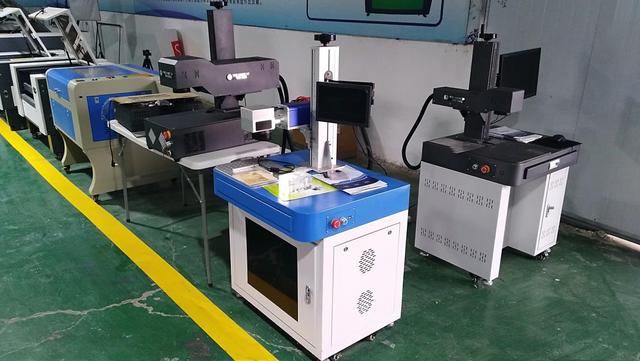
Our systems employ 1064nm Fiber (for high-contrast metal annealing), 355nm UV (for 'cold marking' of delicate polymers without thermal damage), and 10.6µm CO2 lasers (for organic substrates, glass, and wood). This allows complete customizability for packaging and automotive parts lines in Brazil.
Integrating optical character recognition (OCR) and optical character verification (OCV) immediately after the galvo scan head. High-resolution industrial smart cameras capture the marked data, verify legibility against database schemas, and output failure signals to physical pneumatic reject gates with sub-millisecond latencies.
Compliance with Brazil’s Regulatory Norm 12 (NR-12) is mandatory. We provide systems built with dual-channel safety relay circuits, certified safety switches, light curtains, emergency stops integrated directly into the system PLC, and Class 1 laser safety enclosures to pass local audits smoothly.
For multinational procurement directors sourcing technology for facilities in the state of São Paulo (such as Jundiaí, Sorocaba, or Guarulhos), understanding the local financial and compliance framework is critical. The Brazilian import tariff system (including II, IPI, PIS, COFINS, and local ICMS taxes) requires precise coding under the Mercosul Common Nomenclature (NCM). Sourcing a system that integrates the physical marking, handling, and vision verification under a single vendor decreases project delivery risks and speeds up customs clearance for capital equipment imports.
Kinray Laser works in close partnership with local industrial distributors and system integrators in South America. We deliver complete CAD drawings, detailed electrical schematics conforming to IEC/NEMA standards, and comprehensive API documentation for SCADA/MES system handshakes, making certain that global factory deployments remain unified and easy to maintain.
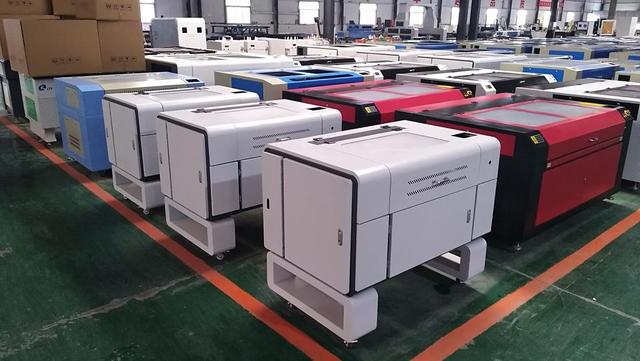
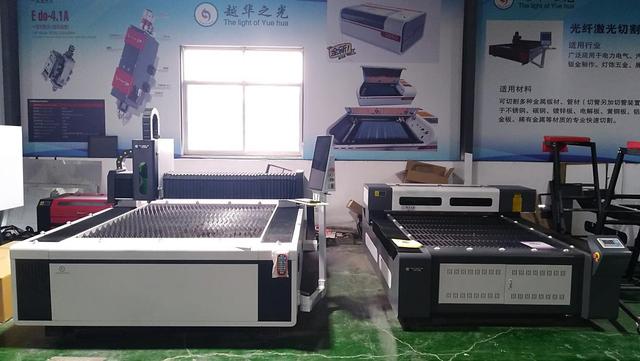
Engineered for absolute operational continuity. These systems utilize premium optical components, advanced digital galvanometers, and rugged frames to operate seamlessly in demanding production lines.

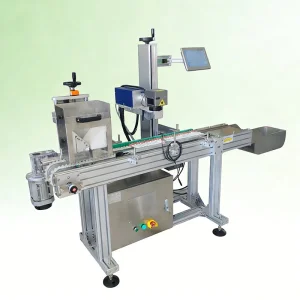
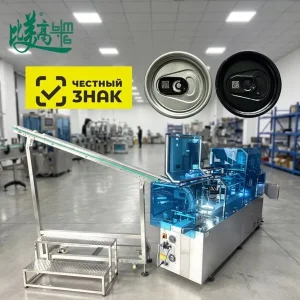


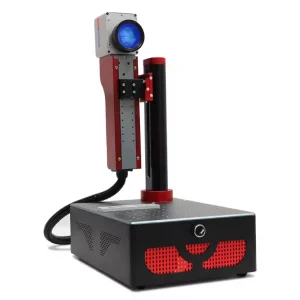

Hangzhou Kinray Laser Co., Ltd. is a leading China industrial laser marking machine manufacturer specializing in advanced fiber and UV laser solutions for global manufacturing industries. With a strong focus on innovation, precision, and intelligent manufacturing, Kinray Laser is committed to delivering high-performance laser equipment that improves production efficiency, product traceability, and marking quality.
Located in Hangzhou, China, the company integrates research and development, manufacturing, sales, and technical support to provide comprehensive laser processing solutions for customers worldwide. Our extensive product portfolio includes fiber laser marking machines, UV laser marking machines, CO2 laser marking systems, MOPA laser markers, flying laser marking machines, 3D laser marking equipment, and customized automated laser solutions.
Kinray Laser products are widely used in electronics, automotive, medical devices, precision hardware, jewelry, packaging, aerospace, consumer goods, and industrial manufacturing industries. Designed for high-speed, high-precision, and permanent marking applications, our systems are capable of processing a wide range of materials, including metals, plastics, ceramics, glass, and composite materials.
Equipped with advanced production facilities and rigorous quality management systems, Kinray Laser maintains strict quality control throughout every stage of manufacturing. Each machine undergoes comprehensive testing to ensure stable performance, reliability, and compliance with international standards.
To support global customers, we offer flexible OEM and ODM services for distributors, system integrators, equipment brands, and industrial manufacturers. Our experienced engineering team works closely with customers to develop customized laser solutions tailored to specific production requirements, automation needs, and industry applications.
Driven by technological innovation and customer satisfaction, Hangzhou Kinray Laser Co., Ltd. continues to expand its global presence and strives to become a trusted partner for intelligent laser processing solutions, helping manufacturers achieve smarter, more efficient, and sustainable production.
As global consumer safety and regulatory norms continue to tighten, manufacturing facilities must adapt their equipment to support real-time digital serialization. We have mapped out our continuous technological updates to future-proof factory investments:
Transitioning from standard rule-based image comparisons to AI deep-learning inference engines on our smart cameras. This reduces false-rejections on complex packaging surfaces and ensures highly accurate legibility readings, even on micro-markings below 0.5mm height.
Integration of unified MQTT and OPC-UA connectivity profiles inside the laser controller board. This provides production managers with remote diagnostics on diode temperature, laser source efficiency, scanner motor wear, and filter saturation levels to schedule predictive maintenance window slots.
Development of multi-wavelength galvo modules capable of switching between UV and Fiber optical paths dynamically within a single run. This enables hybrid component assemblies (e.g., dual metal-and-plastic automotive dashboards) to be serialized in a single process step.
Technical advice on integrating, operating, and maintaining industrial laser markers in Brazilian manufacturing lines.
 Kinray Laser