Kinray Laser


Whitepaper: Industrial Integration of CE Certified Laser Thermography & Electro-Optical Precision Systems
In modern manufacturing corridors, structural integrity, rapid material characterization, and surface evaluation have transitioned from post-production sample testing to real-time, non-destructive evaluations (NDT). Active Laser Thermography has emerged as a premier methodology for identifying sub-surface delamination, micro-cracks, and thermal dissipation anomalies. By utilizing a high-intensity laser source as the dynamic excitation mechanism, these systems generate controlled thermal wave propagation within targeted components, allowing high-resolution thermal sensors to capture transient surface temperature variations.
For global buyers, acquiring CE certified laser thermography systems ensures compliance with European safety standards, covering optical radiation parameters, EMC parameters, and physical mechanical safety. As a leading technology provider, Hangzhou Kinray Laser Co., Ltd. continues to drive innovation by combining state-of-the-art optical systems with rigorous quality control, matching the sophisticated demands of modern precision industries.
Active Laser Thermography: Principles and Modern NDT Methodologies
Unlike passive thermography, which relies solely on the natural thermal radiation generated by a target during normal operations, active laser thermography employs external energy excitation. A laser beam is projected across the test piece, inducing thermal transients. Standard configurations utilize either continuous-wave (CW) lasers with modulated intensity—known as lock-in thermography—or short, high-energy laser pulses, referred to as pulsed thermography.
When the localized thermal wave travels through the material, structural variations (such as voids, delaminations, or cracks) create thermal resistance barriers. These barriers alter the rate of heat dissipation, resulting in localized hotspots or cool zones on the surface. High-speed infrared cameras capture this dynamic heat signature. Advanced algorithms then reconstruct the data to produce a mapping of the internal structure. This provides invaluable insights for quality assurance professionals across fields like semiconductor fabrication, carbon-fiber reinforced polymer (CFRP) processing, and automotive gigacasting.
Crucial SEO Insight: Value of CE Certification in Electro-Optical Markets
Under Directive 2006/42/EC (Machinery Directive) and EN 60825-1 (Safety of laser products), CE certification guarantees that laser systems contain proper interlocks, beam containment shields, and emissions limits, mitigating electrical, chemical, and radiative hazards. For international buyers, it eliminates customs friction and mitigates corporate liability.
Global Market Trajectory and Industrial Demand
The global demand for laser thermography systems is surging. Market metrics show high growth in the aerospace and renewable energy industries, where composite components must undergo detailed structural verification. In battery cell manufacturing, laser-based thermal excitation provides a reliable method to test joint welds on tab connections without damaging the delicate lithium-ion assemblies.
Key economic hubs in Europe, North America, and East Asia are enforcing strict regulatory frameworks for product quality. This has made high-performance NDT instruments a standard requirement rather than an optional tool. As exporters located in strategic shipping and production centers, companies like Hangzhou Kinray Laser Co., Ltd. are crucial in bridging the gap between raw hardware engineering and global compliance standards.
Aerospace & Defense
Non-destructive assessment of composite airfoils, turbine coatings, and sandwich panels. Identifies internal delamination and thermal barrier cracks under operational stress simulation.
Semiconductor Packages
Visualizes sub-surface delamination in multi-die packaging, inspects micro-bumps, and maps micro-thermal stresses within advanced integrated circuits with sub-micron spatial resolution.
New Energy Vehicles
High-speed structural analysis of prismatic and cylindrical lithium-ion batteries. Analyzes busbar welds, anode connections, and thermal run-away protection layers.
Technological Roadmap: The Future of Electro-Optical Systems
Looking ahead, the development of laser thermography systems is focused on integration, speed, and intelligence. The transition from bulky gas-discharge laser units to high-efficiency fiber and UV solid-state lasers has greatly improved optical stability. Modern configurations feature:
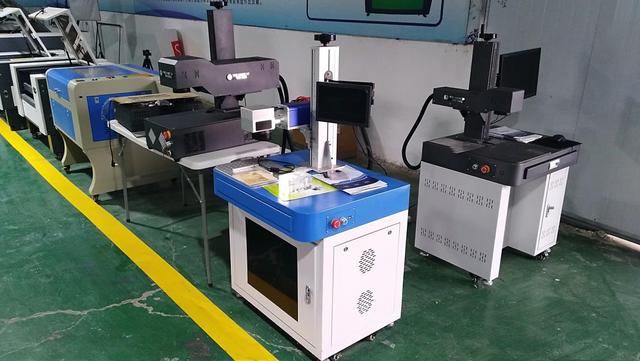
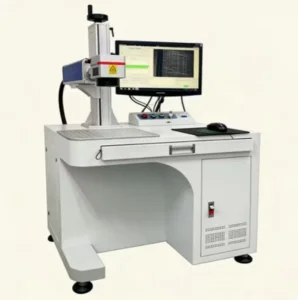
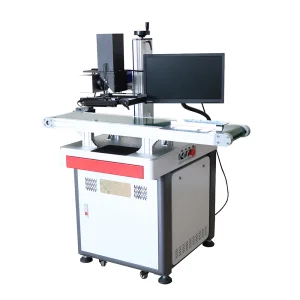
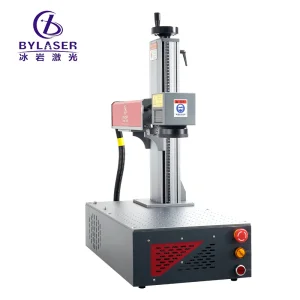
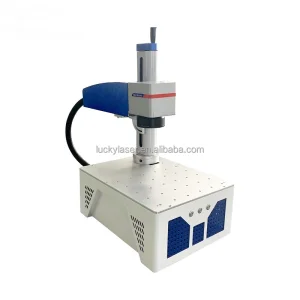
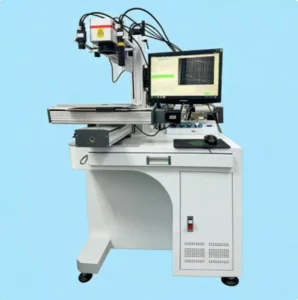
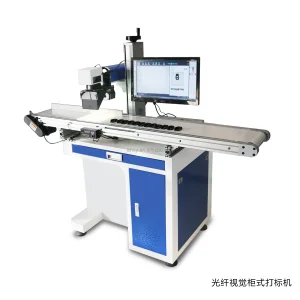
- Integrated Visual Alignment: Advanced systems now include CCD camera positioning, such as our 3D Fiber and UV marking solutions, allowing operators to dynamically overlay active thermal images onto physical surface features.
- MOPA Technology Adaptability: Variable pulse duration (MOPA) control enables precise thermal excitation, minimizing the risk of ablation or damage to delicate materials like gold or silicon.
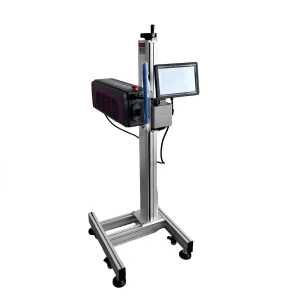
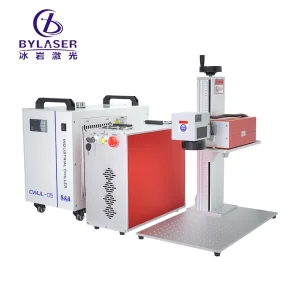
- High-Speed Galvanometer Scanners: Utilizing Sino-Galvo technology allows for rapid raster-scanning, transforming pointwise testing into a continuous, inline screening process.